.io Domain Future: What Chagos Treaty Means

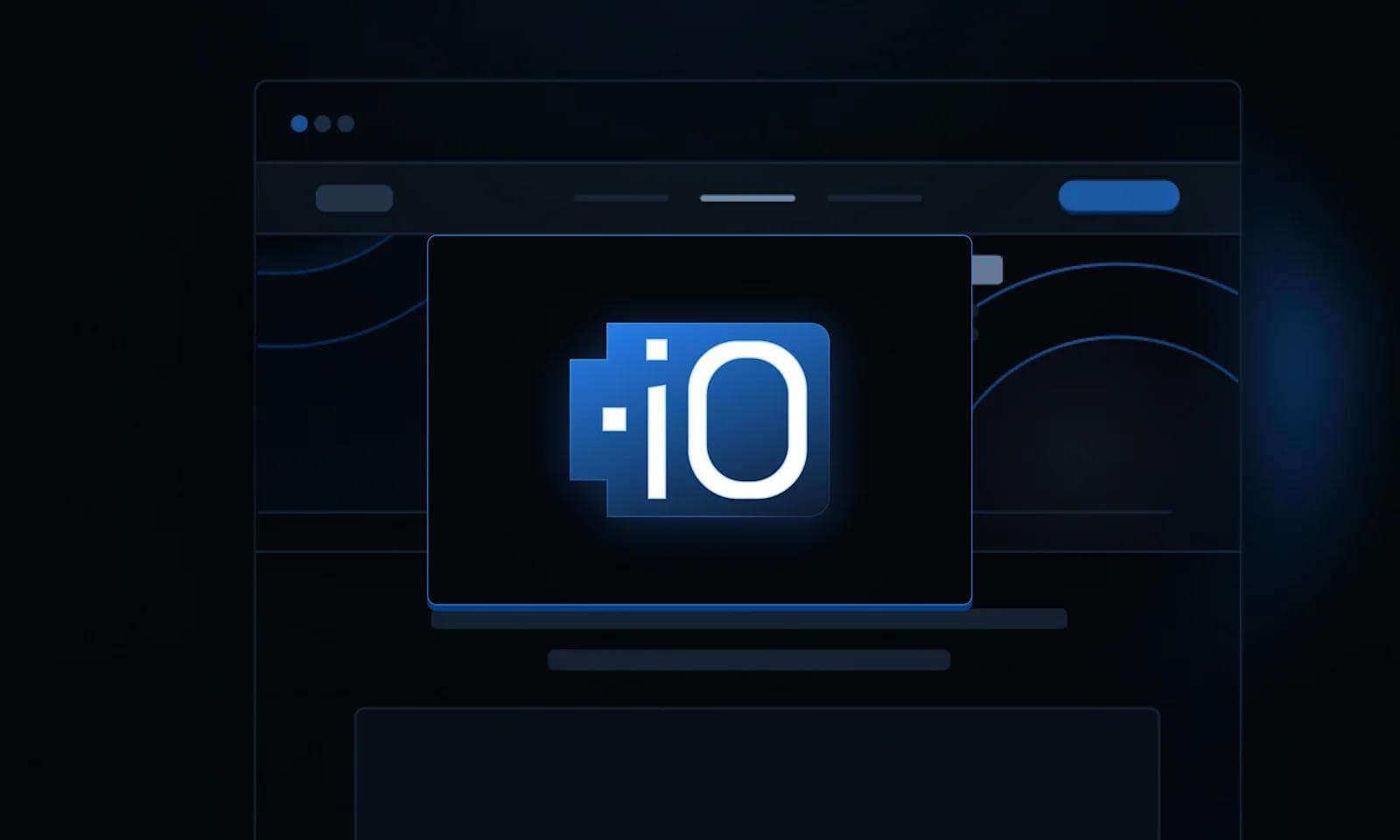
The .io domain has been in the news because registrations have grown sharply in recent years, with some 2025 sources putting the total above 1.6 million, though published estimates vary. Its future remains uncertain after the UK and Mauritius signed a treaty on May 22, 2025 to transfer sovereignty over the Chagos Archipelago; if BIOT were removed from ISO 3166-1, .io could face a phased transition over several years rather than an immediate shutdown. The extension remains popular with SaaS, Web3, and fintech brands.
So, What Happened?
The root of the issue lies in a geopolitical shift: in October 2024, the United Kingdom and Mauritius announced a political agreement to transfer sovereignty over the Chagos Archipelago to Mauritius, and that agreement was later formalized in a treaty signed on 22 May 2025. The Chagos Islands matter because the .io country-code top-level domain (ccTLD) is tied to the British Indian Ocean Territory (BIOT), so any change to BIOT’s status could affect the long-term future of the domain.
This is important because .io has become widely used by startups, SaaS companies, and Web3 and fintech brands. While the treaty includes a 99-year arrangement allowing the UK to continue military operations at Diego Garcia, the broader domain-name implications remain uncertain and will depend on how the territory’s international status is ultimately handled.
B2B tech websites are concerned about how this geopolitical change might impact their online presence.
Why Does This Treaty Affect .io Domains?
Understanding the significance of this treaty requires looking at the origins of the .io domain and its connection to the Chagos Islands. Established initially as the ccTLD for the BIOT, .io has been widely adopted by tech and gaming companies due to its resemblance to "input/output" (I/O), a concept central to tech culture.
However, ccTLDs are inherently tied to the legal authority of the region they represent. In this case, .io has always been linked to the British administration of the BIOT. Since Mauritius will assume sovereignty over the Chagos Islands, control over the .io domain could also transfer.
If that happens, the legal management and operation of the .io domain could change. In a worst-case scenario, the .io domain might even lose its status as a ccTLD if governing bodies decide it no longer aligns with international standards post-transfer.
Is Your .io Domain in Jeopardy?
As it stands, there are a few different scenarios that could unfold:
The case for .io domains disappearing:
If the Internet Assigned Numbers Authority (IANA) follows its protocol, .io domains could become ineligible due to the loss of BIOT as a recognized region. According to IANA guidelines, a ccTLD can be phased out over a period of five to ten years once the region it represents no longer exists.
The case for .io domains staying:
There's also a possibility that Mauritius will maintain the domain. Many countries recognize the economic value of ccTLDs. For example, the domain .ai (Anguilla) generates significant revenue due to its association with artificial intelligence. In 2023, .ai domain registrations generated approximately $32 million USD – more than 20 percent of the government's total revenue for the year.
Similarly, Mauritius may choose to retain .io due to its popularity and financial value in the tech world.
What to Do Now?
Regardless of what happens, this is a story that will evolve over time, and keeping a close watch on updates from IANA and other regulatory bodies will be critical for tech marketers.
As a tech company with a .io domain, here's what you can do to stay prepared:
Monitor updates: Keep an eye on developments from organizations like IANA, ICANN, and domain registrars. These bodies will likely provide official guidance if any significant changes occur to .io domains.
Secure alternative domains: Even if nothing happens immediately, it's wise to proactively purchase alternative domains, such as .com, .org, or even .ai. This way, your brand can seamlessly transition if required.
Consult your registrar: Many domain registrars (like GoDaddy, Bluehost, and Cloudflare) will offer advice and updates. Reach out to them to understand what they're seeing on the horizon and ask about how you can protect your brand's online presence.
What Happens If .io Domains Disappear?
In the worst-case scenario, if .io domains are abolished, you will have to migrate your website to another domain. This could be extremely concerning for some businesses, who could have to deal with either 1) buying a very expensive .com, .org, or .ai domain or 2) changing their domain to one that is not already taken.
One way or another, this will likely have an impact on your SEO.
The disappearance of .io domains could disrupt search visibility by breaking backlinks, causing a loss of accumulated link equity, and decreasing domain authority. Even with 301 redirects, websites may face drops in organic traffic and keyword rankings as search engines take time to re-index new URLs.
If this does happen, migrating to a new TLD requires precise planning and monitoring with tools like Google Search Console to avoid penalties from broken links and crawl errors.
How does this impact the domain industry?
The potential loss of .io will undoubtedly send ripples through the broader domain industry. Here are some impacts to consider.
Valuation of domains: Right now, .io domains hold significant value, especially in the tech world. However, the uncertainty surrounding their future could cause this value to drop, impacting both domain investors and businesses.
Growth of alternative domains: If .io disappears, there could be a rise in the popularity of other ccTLDs like .ai, .tech, and even generic top-level domains (gTLDs) like .com or .org. Domain registrars will likely see increased demand for these alternatives.
Economic shifts: As mentioned, ccTLDs can be a lucrative asset for countries. The shift in control over .io could result in a new economic opportunity for Mauritius, assuming they choose to retain and manage the domain.
Closing Thoughts
So, what are the odds that .io domains will be disbanded?
No one knows for sure. The deal has been shelved indefinitely after the US failed to provide formal approval, with no new ratification bill expected in the near term and the agreement described as "on ice," though UK officials say they hope to revive it with future US support.
But if you take into consideration the amount of potential revenue for Mauritius, it would make sense for their government to support .io TLDs. And we're talking about millions of dollars annually for a small island country, so this isn't insignificant money.
However nothing is for certain and if you are currently hosting your website on a .io domain, you should be prepared with a backup plan. The .io domain market has seen meaningful price increases, amid ongoing uncertainty from the UK-Mauritius Chagos sovereignty transfer. Exploring and securing alternative domains such as .app, .ai or .dev is worth considering now.
We aren't sure when the next update will be, but keep an eye out so you give your B2B tech company as much time as possible to react to the news.

Your website is your biggest growth lever—are you getting the most out of it? Schedule a strategy call with Webstacks to uncover conversion roadblocks, explore high-impact improvements, and see how our team can help you accelerate growth.