The Case for Phased Website Launches in B2B Enterprise
For large-scale B2B brands, the traditional "big bang" website launch is becoming a thing of the past. Moving hundreds of pages at once introduces immense risk, which is why a staged rollout is often the smarter strategic move.
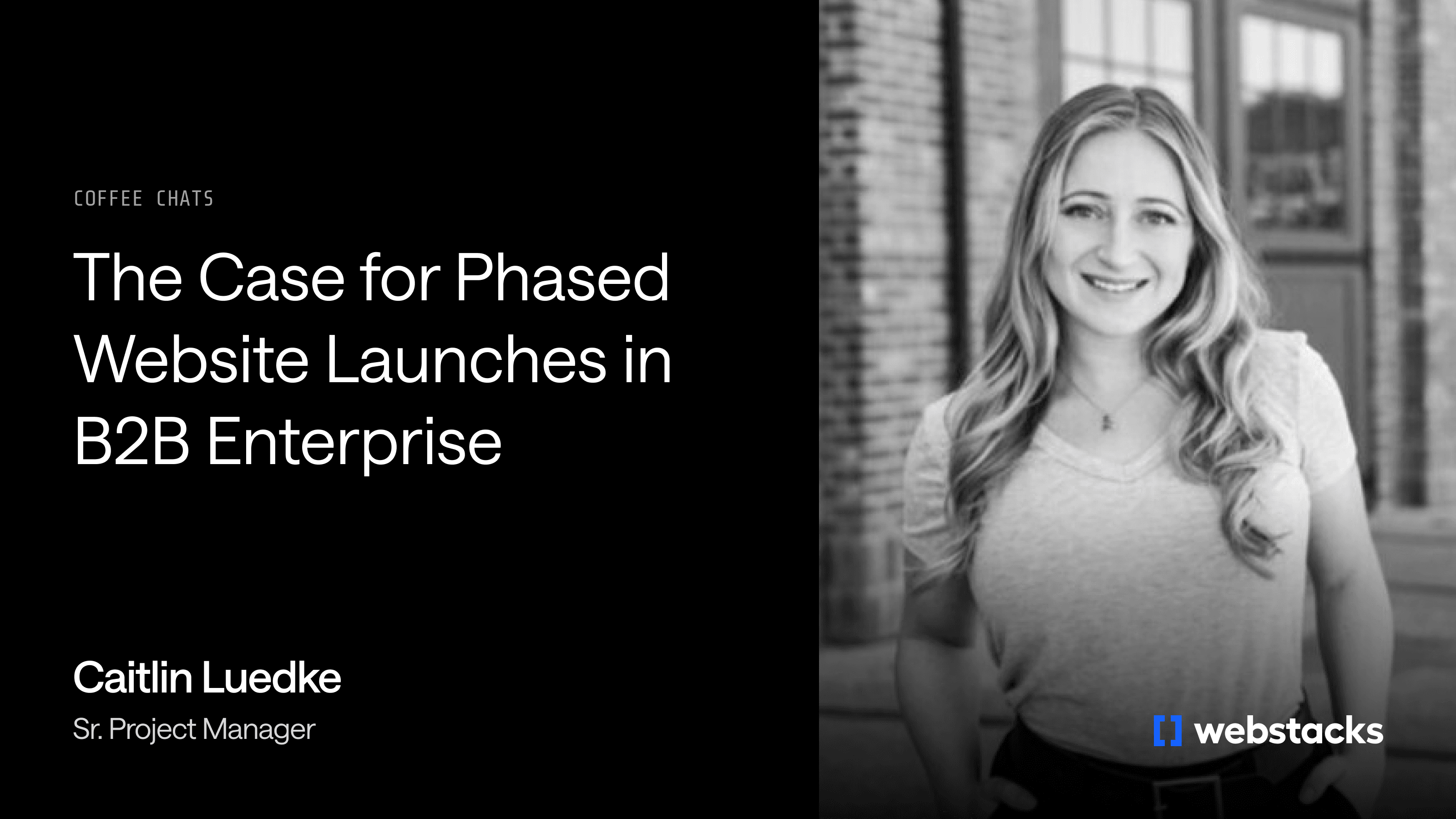
I sat down with Caitlin Luedke, Project Manager at Webstacks, to discuss something that keeps coming up with enterprise clients: the assumption that website launches happen all at once.
After managing dozens of projects from lean startups to massive enterprise brands like LogicMonitor and Gong, Caitlin has seen firsthand what happens when you try to launch 300+ pages simultaneously versus taking a phased approach. Her perspective on what works, what doesn't, and why phased launches have become our recommended approach for enterprise clients was eye-opening.
Why Full-Site Launches Create Unnecessary Risk
Most enterprise teams assume their website launch needs to be comprehensive: every page migrated, every integration tested, everything live at once. Caitlin's experience with one enterprise client illustrates precisely why that assumption creates problems you don't need.
The project involved several hundred pages of manual migration, plus structured content like blogs, case studies, events, and press releases. But the real problem wasn't just volume—it was trying to validate everything simultaneously.
"To launch the full site all at once was like rolling the dice," Caitlin said.
Troubleshooting issues in real-time while launching hundreds of pages required a launch call that lasted several hours.
Compressing all QA, content approval, technical validation, and stakeholder sign-off into a single high-pressure window means even a single broken integration or content error can shift the entire timeline. Resources get spread impossibly thin, global issues surface late, and the launch experience feels more like crisis management than celebration.
The Strategic Logic Behind Phased Launches
That experience taught us something critical: the problem with full-site launches isn't just the complexity of coordination. It's that trying to validate everything simultaneously spreads resources so thin that quality becomes impossible.
Phased launches work because they create a sequential testing environment where you:
- Fix global issues once, instead of discovering the same mobile bug across 200 landing pages three months later
- Train teams progressively so internal stakeholders learn the CMS through real work in Phase 1 of the launch, before building independently in later phases
- Capture value months earlier by launching core conversion paths first, rather than waiting for every secondary page to be perfect
This isn't just breaking work into chunks. It's fundamentally rethinking how enterprise websites get built, validated, and operationalized.
The Anatomy of a Phased Launch
Before diving into why phased launches work better, it helps to understand what we mean by "phases" in practice. The structure isn't arbitrary—it's designed around priority, risk, and dependency sequencing.
Phase 1: Core Pages That Drive Traffic and Conversions
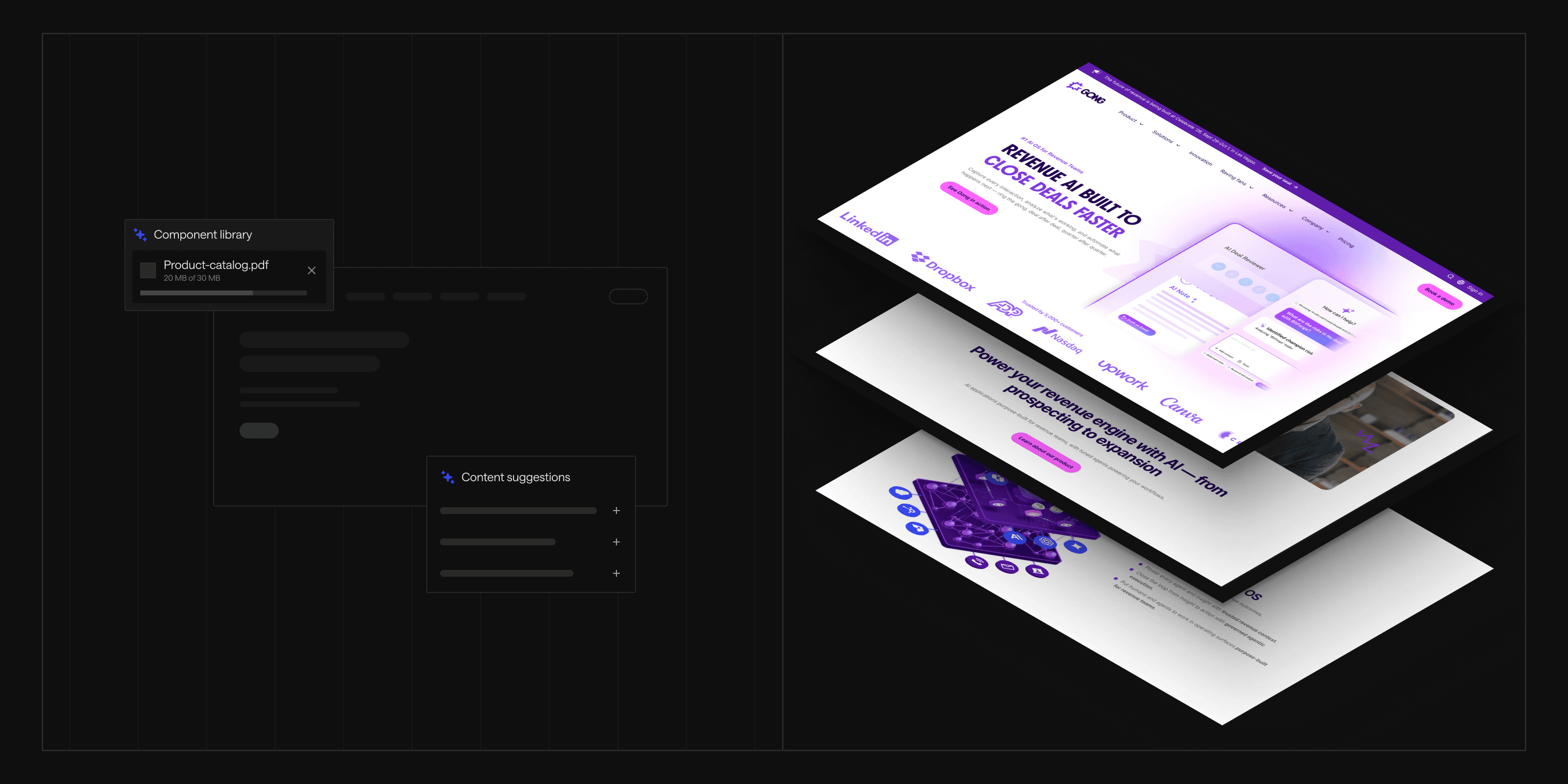
Phase 1 focuses on core pages: the homepage, primary product and solution pages, platform pages, and key navigation elements. These are the pages that drive the majority of your traffic and conversions.
"For our client, Gong, we had about 50 pages in Phase 1," Caitlin explained. "Anything in the top nav or footer that would be considered a core page."
The goal of Phase 1 is to establish your design system, component library, and brand presence on the pages that matter most for your pipeline. This phase involves the heaviest lift in terms of custom development, design iteration, and stakeholder alignment.
Phase 2: Structured Content and Secondary Pages
Phase 2 handles everything beyond core pages: structured content like blogs, case studies, events, and press releases, secondary landing pages, localization, resource hubs, and any complex integrations that need isolated attention.
The key distinction of Phase 2 is that it scales the foundation built in Phase 1 across the rest of your content without requiring the same level of custom development and intensive QA.
"By Phase 2, a lot of the site content just requires dropping in components for pages and editing directly in the CMS instead of going through wireframe, design, and all of that," Caitlin explained.
Once the foundation is established in Phase 1, Phase 2 becomes more about coordination and content readiness than technical complexity. This structure also allows for flexibility in timing. Phase 2 doesn't have to be monolithic. For example, in Gong's case, certain pages needed to launch by specific dates tied to conferences or product releases, while others could wait.
Reduced Scope Makes QA Focused and Effective
The single biggest difference between full-site and phased launches is the ability to give critical pages and functionality the QA attention they actually need. When the scope is manageable, teams can catch issues early, fix them once, and prevent them from cascading across the entire site.
The contrast between a full-site approach and Gong's phased strategy couldn't be more stark. "One of the easiest launches I've ever done," Caitlin said about Gong's Phase 1. "It was so easy and so much more approachable."
The difference wasn't just fewer pages—it waa s manageable QA surface area. Instead of validating 300 pages across mobile, desktop, multiple browsers, and dozens of integrations simultaneously, the team could focus on getting the most critical user journeys right.
This focused approach means you identify and fix global issues before they multiply. If a component breaks on mobile during Phase 1 QA, you catch it immediately and fix it once. That fix then protects every page built in Phase 2 that uses that same component. You're not discovering the same mobile bug across 200 landing pages three months later.
The principle extends to complex, high-stakes functionality like conversion tracking. For Gong, forms were isolated into their own workstream precisely because they required dedicated QA attention. With 15+ platforms talking to each other when a form is submitted—from Salesforce to Chili Piper to 6sense—one misconfiguration could break attribution or sales workflows entirely.
"The amount of QA just for forms and making sure all that works and their backend is flowing nicely, that alone could take a month," Caitlin said. When your forms feed into multiple CRMs, attribution tools, and analytics systems, you don't want to test that integration alongside 200 other pages. You want it in a controlled environment where you can validate every handoff.
Team Independence in Phase 2 Accelerates Page Creation
The operational benefits compound after Phase 1 is complete: your internal team has already learned the CMS, understands the component library, and can build pages independently. This eliminates the bottleneck of waiting for agency resources to complete every content update or new page request.
Phase 1: Learning the System Through Real Work
Even with Gong's phased approach, Phase 1 had content management challenges. Caitlin described the volume of small requests that came through BugHerd, the QA tool clients use to flag issues and request changes.
"We had 80 to 100 BugHerd comments of them not being fully in the CMS and being able to make those updates themselves," she said.
These weren't major technical problems—they were content edits: headline changes, image swaps, copy adjustments. "That paired with the amount of content that they wanted to change even after they delivered the Google docs and we migrated, it was wild."
Phase 2: Building Pages Without Waiting for Agency Resources
But here's where phased launches create a compounding benefit. By Phase 2, Gong's team was already trained and active in the CMS. They understood the component library, knew how to build pages, and could make updates independently.
"Now their team is in the CMS, they have the resources, the hands to be familiar in the CMS, know how to create new pages," Caitlin explained. "We don't have to go through our standard process of creating a copy doc and their team editing in a copy doc. They just build the page directly in the CMS."
This shifts the dynamic from vendor-client to collaborative partnership. Pages don't wait for wireframes, copy docs, and design approvals. Teams build pages themselves using the component library established in Phase 1.
Once the design system and components are in place, certain pages become plug-and-play. "A lot of these pages, if we're not designing something new, I could go and create them today, because the components are there, everything's there," Caitlin said.
This is the advantage of composable architecture combined with phased launches: after Phase 1, your team isn't waiting for agency resources to publish new pages. They're building on a foundation that scales.
Core Pages Drive Pipeline Months Before the Full Site Is Done
When you launch core conversion paths first rather than waiting for every page to be perfect, you're capturing revenue opportunities months earlier. This timing advantage affects everything from lead generation to sales enablement to competitive positioning.
Caitlin framed it in terms every VP of Marketing would understand: "You don't have to wait 10 months for your site to look good again. You're doing the redesign, you're doing all this work probably to push more leads, to fix your brand, to make it look better."
The problem with full-site launches is the opportunity cost. Think about that timeline. Your homepage, product pages, and primary conversion paths could be driving pipeline in Q2 instead of Q4. Your sales team could be pointing prospects to a modern, credible web experience instead of apologizing for the outdated one.
Phased launches let you capture value sooner and iterate based on real user feedback instead of theoretical assumptions made six months earlier.
What Makes Phased Launches Successful
To run phased launches smoothly, you need an agency partner with strong project management and technical expertise to prevent chaos, not create it.
Most agencies default to risky “all-at-once” builds or unstructured agile cycles, but Webstacks uses a phased approach because it is the only reliable way to maintain quality at scale.
Caitlin's conclusion was definitive: "I would never not do a phased launch again."
Our project managers make strategic decisions based on your technical dependencies and business priorities to deliver predictable timelines. If your current agency is proposing a months-long, all-or-nothing timeline, they likely do not understand the realities of enterprise web operations.

Your website is your biggest growth lever—are you getting the most out of it? Schedule a strategy call with Webstacks to uncover conversion roadblocks, explore high-impact improvements, and see how our team can help you accelerate growth.

I lead growth at Webstacks, connecting strategy, design, and engineering to build websites that drive results. I specialize in website strategy, CMS implementation, and helping B2B teams scale their web presence.