What Gong's Website Rebuild Teaches Enterprise Teams About Building for the AI Era

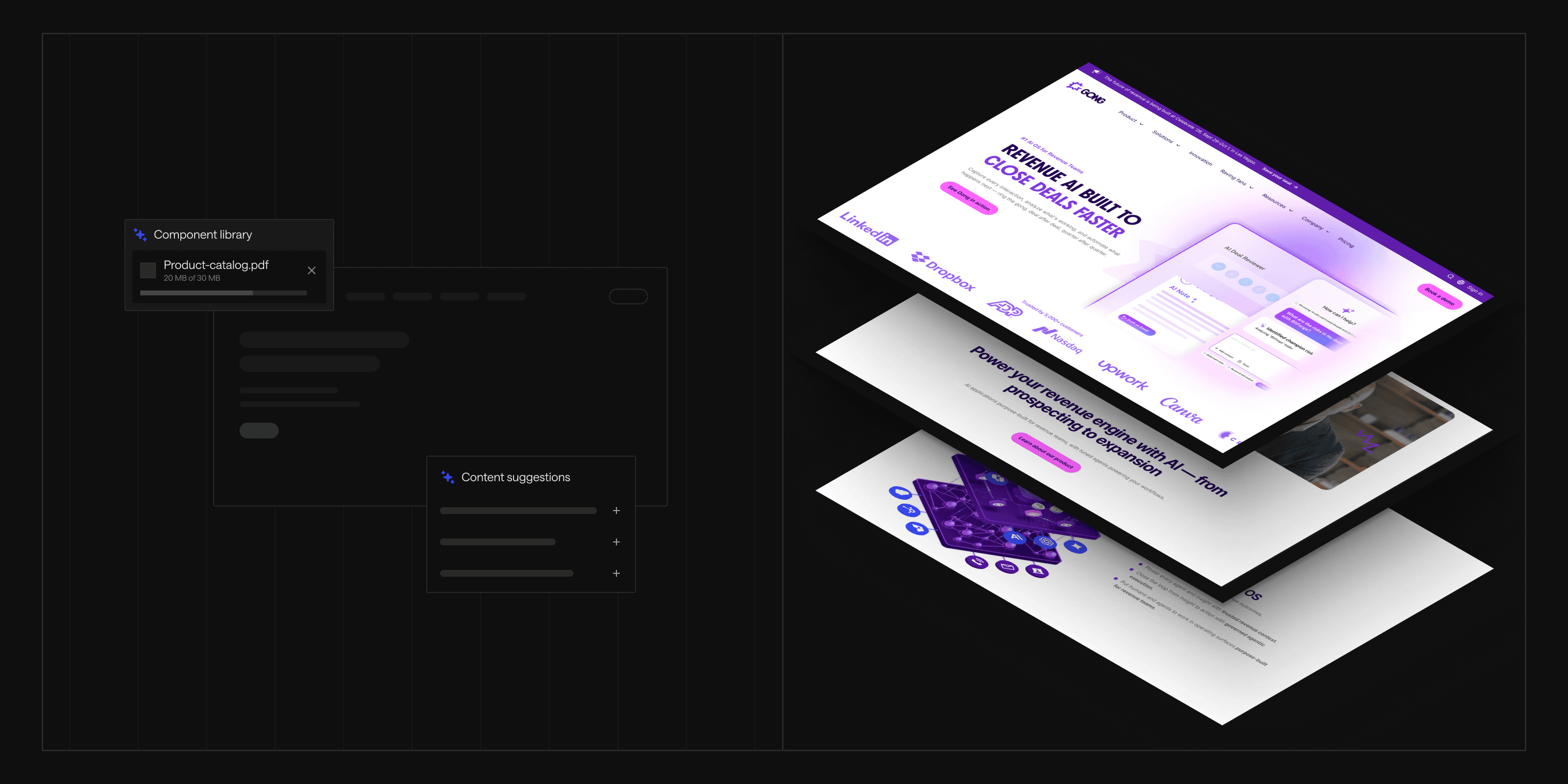
Gong's decade-old WordPress site had reached the point where reskins and plugins could no longer keep up with the business. Its migration to structured content on Sanity did more than replace a CMS: it created the foundation Gong now uses to run AI-assisted localization and publishing. The sections below walk through why the old setup broke down, how the new one was built and what Gong is doing with it now.
Key Takeaways
- Gong migrated more than 400 pages from WordPress to Sanity to remove the operational friction created by years of reskins, plugins and manual publishing workflows.
- Structured content, not the CMS switch itself, unlocked faster publishing, stronger governance and AI-assisted localization.
- AI-powered translation worked because Gong built the content model first; the team paired AI Assist with custom style guides for French and German and human review through Content Releases.
- Gong is now extending the same foundation into automated blog summaries, content refresh workflows and future agent-driven experiences.
- Enterprise teams evaluating a CMS move should treat structure as the prerequisite for AI content operations.
Why Gong's Old Foundation Couldn't Support What Came Next
Enterprise websites accumulate technical debt one reskin, one plugin and one deadline-driven fix at a time. Each change looks harmless on its own. The accumulation eventually becomes an operating constraint.
Gong hit that point after years of growth on WordPress. Bryce Wellington, who leads web engineering and content production at Gong, described a platform shaped by a decade of patches: multiple redesigns layered on top of each other and plugin dependencies nobody fully owned. Three regional teams, in San Francisco, New York and Dublin, ended up interpreting the brand differently because the system gave them no shared structure to work from.
The friction showed up in publishing speed, developer dependency, localization consistency and governance across regions. Gong's expansion into new markets, paired with its repositioning around AI, pushed a website built from patched-together pages past what it could support. The website migration that followed reset how the business operates online; swapping CMS platforms was the mechanism, not the goal.
Enterprise teams facing the same decision get better outcomes when they frame a CMS migration as an operational reset, since that framing addresses what's actually costing the business time and revenue. A closer look at why enterprise teams outgrow WordPress, and the CMS selection criteria that follow from it, breaks down the specific signals that separate a platform still worth patching from one that has become the constraint itself.
Why Sanity Became the Foundation for Gong's Rebuild
Sanity became the foundation because it let Gong model content around how the business runs, not the other way around. Gong partnered with Webstacks to move more than 400 pages off WordPress and onto Sanity. The rollout started with the homepage, primary navigation and core solutions pages, the pages that carry the most pipeline weight and set the pattern for everything that follows.
We design and develop high-performance websites on Sanity built for scale, speed, and collaboration.

Phase 1 established the design system and component library on the highest-traffic pages first, then extended the same structure across the rest of the site once the foundation held. A planned, phased CMS migration reduces risk by validating the content model on high-traffic pages before committing the entire site to it.
Content needed to be modeled around how the business actually runs, not forced into fixed page templates, and that requirement drove the choice of Sanity over a like-for-like CMS swap. Gong organized resources, landing pages, product lines, campaigns, conversion points and regional variants as reusable content types instead of one-off page builds. Sanity's content modeling approach supported that shift without sacrificing the design governance Gong's brand team needed to maintain consistency across regions.
For Gong, the platform choice functioned as the mechanism for building a foundation that could support scale, speed and whatever the next phase of the business required.
How Structured Content Changed What Gong's Team Could Do
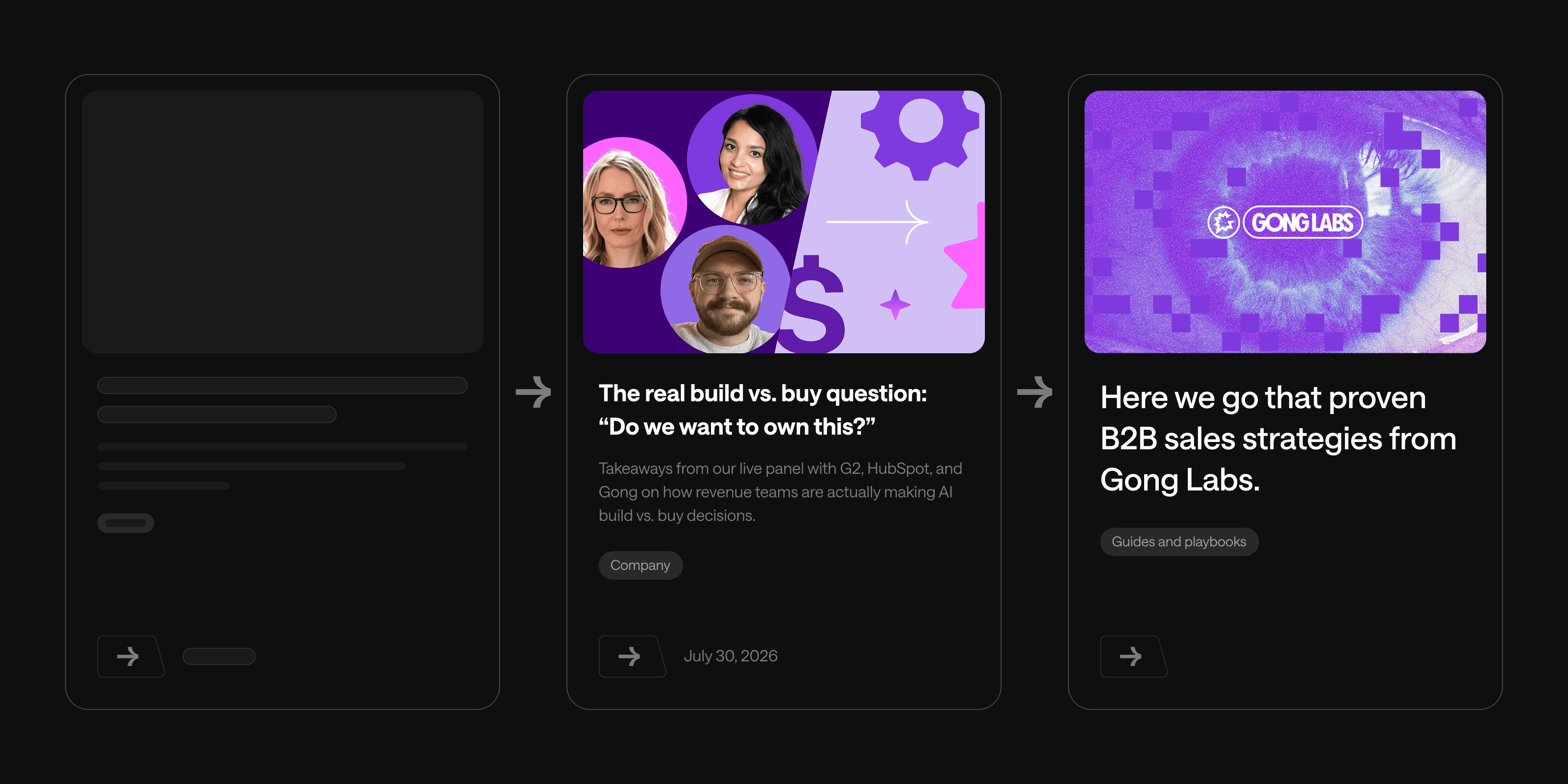
Structured content made the rest of the rebuild possible. Instead of every page existing as a fixed layout, the site breaks into reusable fields, modules and content types: a hero section, a testimonial, a CTA, a stats bar, a resource card. Each one functions as a reusable system component rather than a page-specific asset.
Marketing gained direct control over publishing right away. Designers and developers could build against a modular system that preserved brand consistency without relitigating design decisions on every page. Governance got easier because the content model and editorial workflows now live inside Sanity itself, rather than in a patchwork of plugins and tribal knowledge.
Teams evaluating a CMS on features alone often miss this piece. What structured content actually is and why it matters for scale is worth its own deeper look, but a CMS becomes infrastructure the business can build on only after content stops functioning as static pages and starts functioning as a system of reusable parts. Webstacks connected the content model, the design system and the front-end implementation together, giving Gong's team a CMS experience built around how they actually work
How Gong Used Structured Content to Support AI-Assisted Localization
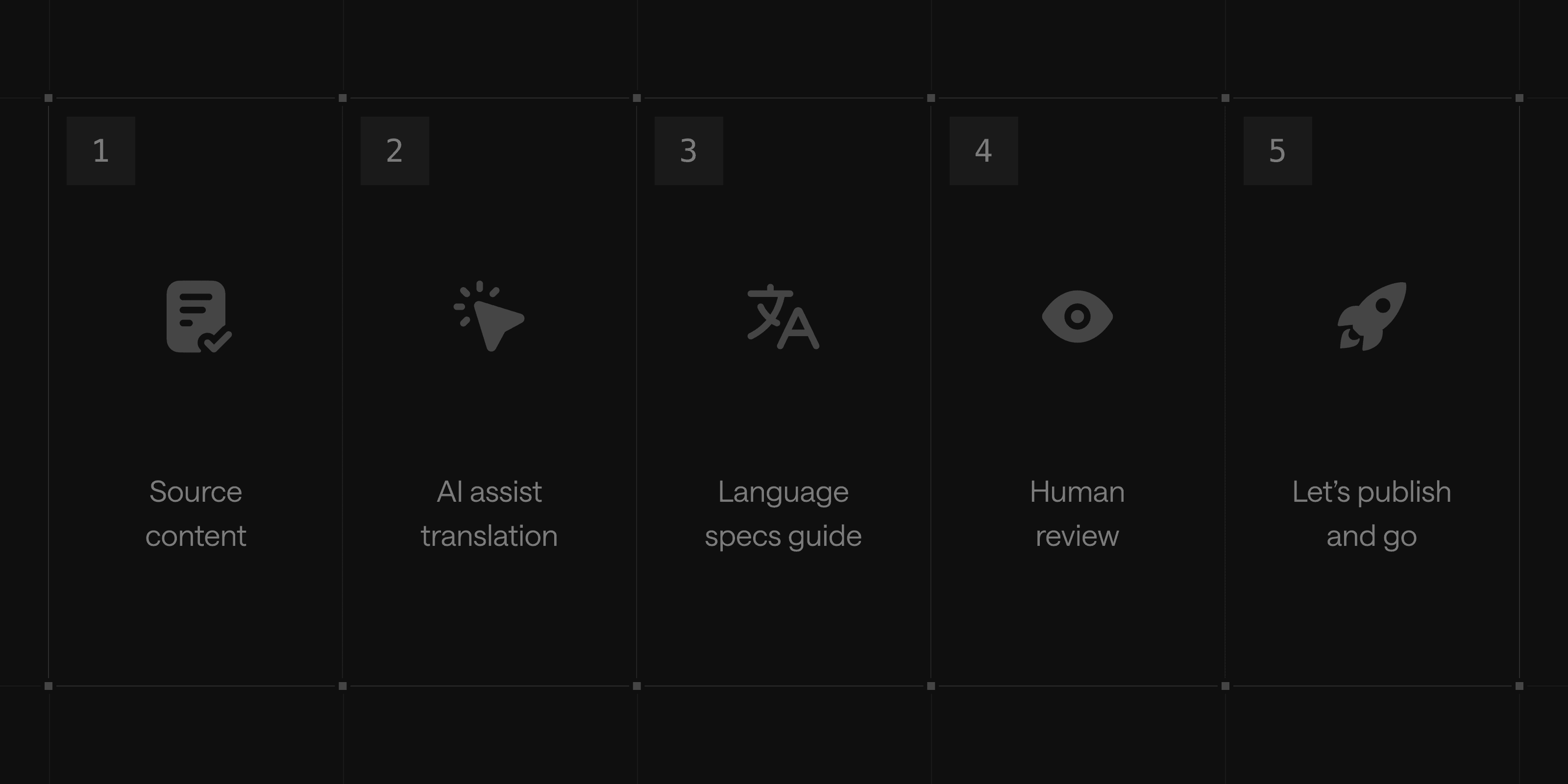
Gong's localization workflow shows what structured content makes possible. The old process moved messaging and product updates across languages through manual handoffs, with more review cycles and more room for regional inconsistency at every step.
Structuring content in Sanity folded localization directly into the content operation instead of treating it as a bolt-on process. The team used AI Assist for translation, built language-specific style guides for French and German and layered human review into the workflow through Content Releases. Regional teams stayed in the loop, and the process became repeatable instead of reinvented for every campaign.
Bryce and Nikan both made the same point during the session: AI did not shortcut localization quality. It cut manual effort while keeping the same level of review in place. AI reduces manual localization effort only when the underlying content is already structured, tagged and connected to a real workflow. Unstructured legacy content run through AI adds a new layer of complexity on top of the old one. A dedicated look at AI-assisted localization with a headless CMS walks through how the style guide and review workflow were built, for teams weighing the same setup.
Sanity's own published guidance echoes the same sequencing. Its AI translations resource and its pragmatic framing of AI-powered content operations both make the case that AI performs best on content that's already organized.
What Gong Is Building Next in AI Content Operations
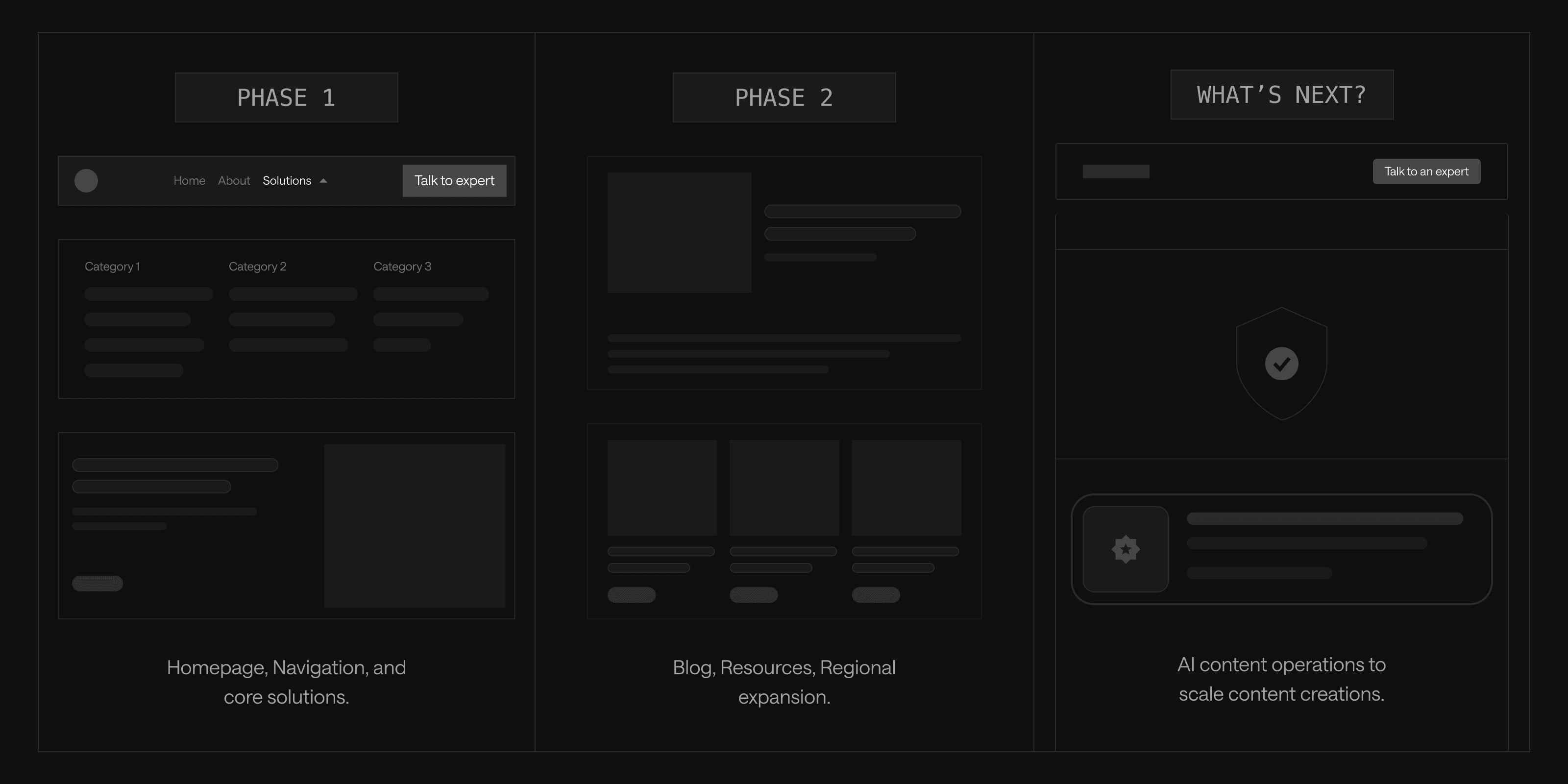
The migration created room for Gong to plan past today's publishing needs. With structured content in place, the team is now exploring AI-generated blog summaries, content refresh workflows, prompt libraries and future customer-facing experiences powered by agents.
These workflows run inside the content system instead of bolting onto it, so Gong can reuse the same structured content to cut repetitive work, improve content discoverability and support more capable digital experiences as they come online.
A website built this way stops functioning as a destination and starts functioning as a content system: one foundation supporting publishing, localization, governance, automation and whatever AI-native experience comes next. Turning a website into a content operating system covers what that looks like in practice, including where automation like Sanity Functions fits into blog summary generation and refresh workflows. Sanity's broader content operations research puts Gong's trajectory in the context of where enterprise content teams are heading industry-wide.
What Enterprise Teams Can Take From Gong's Story
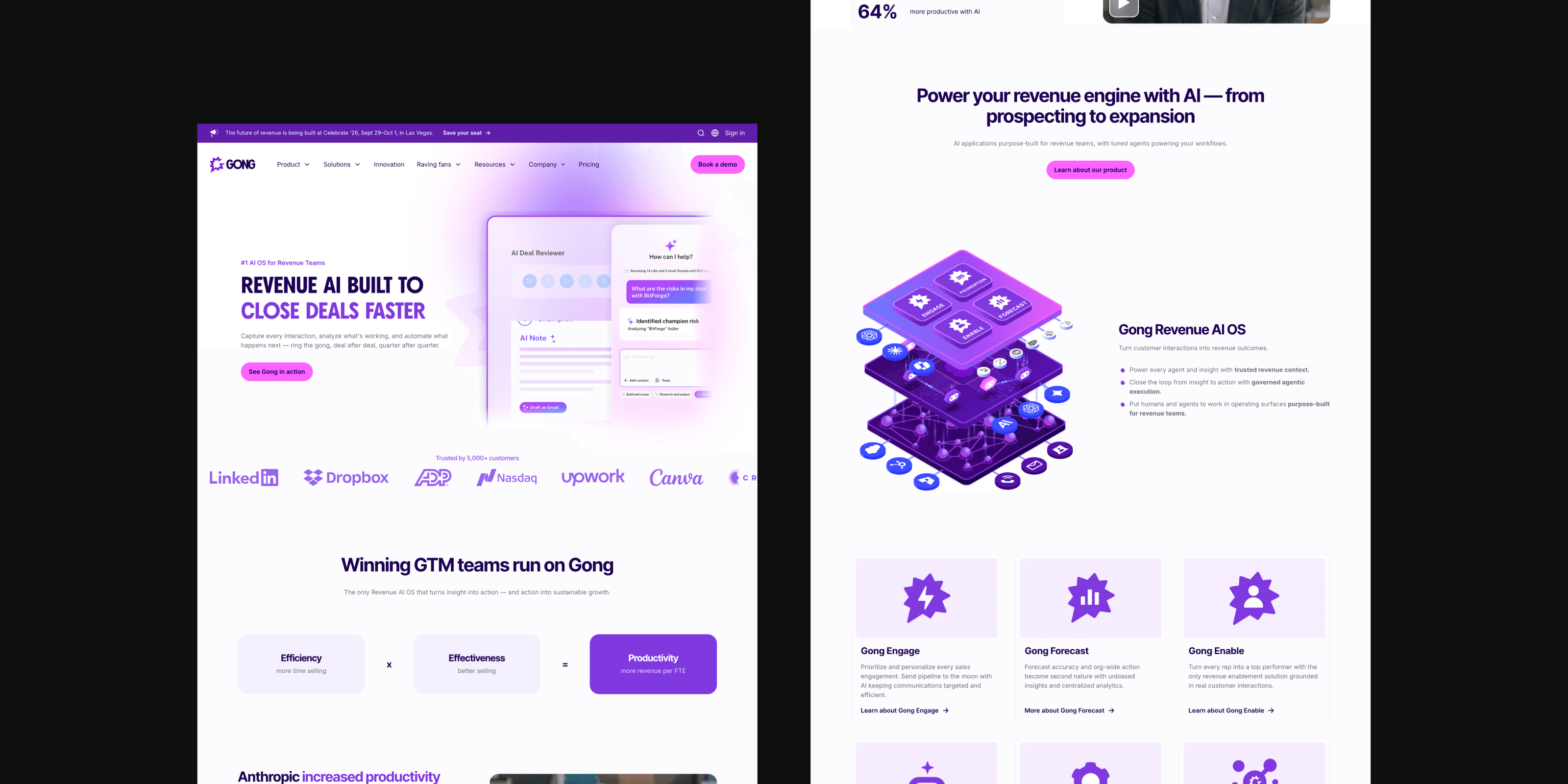
Gong's transformation offers a practical framework for any enterprise team evaluating its own CMS, website operations and AI readiness.
The migration solved an operational problem. Gong moved off WordPress because the platform could no longer support where the business needed to go. Any enterprise CMS evaluation should start from that same question.
Structured content did the heavy lifting. Faster publishing, consistent governance and reliable localization all trace back to modeling content as reusable components instead of fixed pages.
AI added value because the foundation was already right. Applied to unstructured content, AI multiplies existing chaos. Applied to structured content, it removes manual effort while keeping governance intact.
The broader pattern holds beyond Gong. Enterprise websites are becoming business-critical systems that need to support multiple teams, regions, workflows and AI experiences still taking shape. Gong's migration from WordPress to Sanity was the starting point; what the team is building on top of it, in localization and AI content operations, is still taking shape.
Ready to treat your website like a growth product? Talk to Webstacks.