Top Sanity Alternatives and Competitors

Sanity has earned its reputation as one of the most developer-flexible headless CMS platforms on the market, holding the #1 rated headless CMS position on G2 for four consecutive years. Its real-time collaboration, customizable content studio, and GROQ query language give technical teams granular control over content modeling and delivery. For organizations with strong developer resources and complex content structures, it's a compelling choice.
But developer flexibility isn't the only variable that matters when selecting a CMS. For many B2B teams, the deciding factors are more operational: how easily can marketers publish without filing dev tickets? How well does the platform integrate with HubSpot, Salesforce, or the rest of your martech stack? Can the content architecture scale as your product line, audience segments, and localization needs grow? These are the questions where Sanity's strengths may or may not align with your reality.
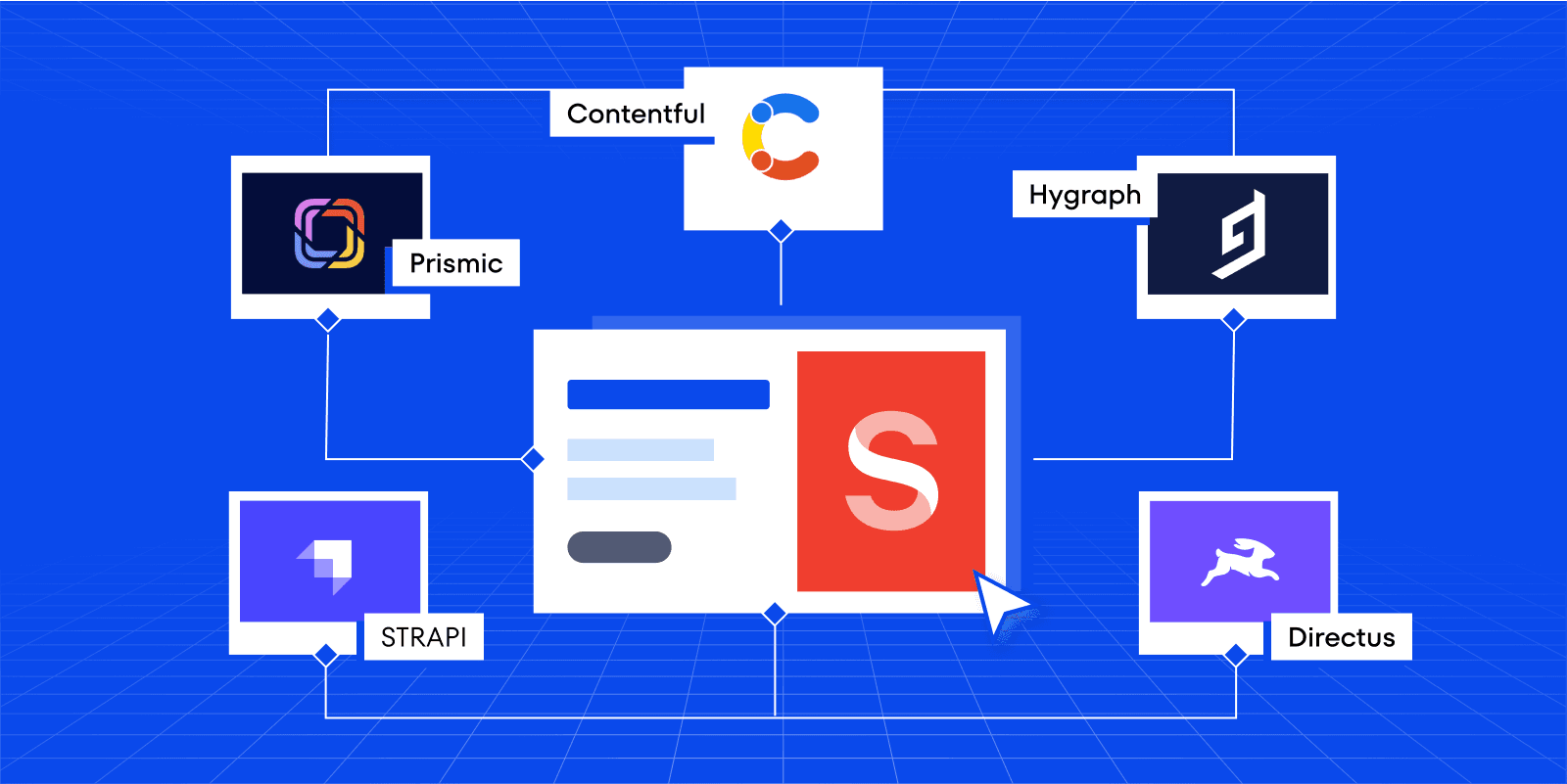
This article breaks down the top Sanity alternatives and competitors in 2026, including Contentful, Storyblok, Builder.io, Strapi, Hygraph, DatoCMS, Directus and WordPress (headless). Rather than ranking platforms by feature count, we evaluate each one against the criteria that actually determine long-term success: content team autonomy, integration depth, governance capabilities, and scalability. The goal is to help you match your CMS to how your team operates today and how your website needs to perform as growth infrastructure over the next two to three years.
Sanity is a strong platform, but the right alternative depends less on feature parity and more on operational fit. Evaluating these options through the lens of your team's workflows, technical capacity, and scaling trajectory is how you avoid choosing a CMS you'll outgrow before your next rebrand.
| Platform | Best Fit | Primary Strength | Key Tradeoff |
|---|---|---|---|
| Contentful | Enterprise teams with complex content models and governance needs | Deepest integration ecosystem and mature enterprise tooling | Higher cost at scale; rigid editing experience |
| Storyblok | Marketing-led teams needing page-building autonomy | Visual editor that bridges marketer independence and headless architecture | Advanced layouts and enterprise governance still maturing |
| Builder.io | Teams on React/Next.js wanting to decouple marketing from dev sprints | No-code visual editor layered onto existing codebases | Less suited for complex structured content modeling |
| Strapi | Developer-first teams with data residency or vendor lock-in concerns | Open-source flexibility with full infrastructure ownership | Requires significant engineering investment to maintain |
| Hygraph | Organizations federating content across multiple systems | Content federation via native GraphQL API | Smaller ecosystem; federation adds architectural complexity |
| DatoCMS | Mid-market teams balancing developer flexibility and editor usability | Clean editing experience with standout image handling | Smaller enterprise footprint and integration ecosystem |
| Directus | Teams needing a CMS layer on existing database infrastructure | Database-first approach with automatic API generation | More utilitarian editor; smaller plugin ecosystem |
| WordPress (Headless) | WordPress-native teams modernizing delivery without full migration | Familiar editing, largest plugin ecosystem, lowest switching cost | Compounding technical debt, security overhead, ongoing maintenance |
We design and develop high-performance websites on Sanity built for scale, speed, and collaboration.

What Makes Sanity Stand Out (and Where It Falls Short)
Before evaluating alternatives, it helps to understand what Sanity does well and where organizations commonly hit friction. This context shapes the criteria that matter when comparing platforms.
Core Strengths
Sanity's advantages center on developer control and content modeling flexibility:
- Customizable content studio: Built on React, the studio can be tailored to match specific editorial workflows, giving engineering teams full control over the authoring experience.
- GROQ query language: Sanity's proprietary query language gives developers precise control over how content is fetched and structured, enabling complex content retrieval without the overhead of traditional REST endpoints.
- Real-time collaboration: Multiple editors can work simultaneously without conflicts, reducing bottlenecks in content production.
- API performance: Consistently fast response times, even under complex query loads, supporting high-traffic sites and demanding content architectures.
These strengths make Sanity a strong fit for teams with dedicated developer resources and content models that require deep customization.
Common Friction Points
Where friction tends to emerge is in organizations where marketing teams need more autonomy:
- Steeper learning curve for non-technical editors: Sanity's flexibility comes at the cost of a more complex editorial interface compared to visual-first competitors.
- Developer dependency for content model changes: Adjustments to content structures often require engineering involvement, which can slow publishing velocity for marketing-led teams.
- Pricing complexity at scale: Costs can become harder to predict as API usage and dataset sizes grow.
- Smaller integration ecosystem: Compared to more mature competitors, Sanity offers fewer pre-built integrations and plugins, which means more custom development for common martech connections.
These aren't universal flaws. They're signals of misalignment between platform design and team operating model. The question isn't whether Sanity is a good CMS. It's whether it's the right CMS for how your team actually works.
How to Evaluate a Headless CMS (The Framework That Actually Matters)
Most CMS comparison articles rank platforms by feature lists: number of API endpoints, supported frameworks, available plugins. That approach looks thorough, but it misses the factors that determine whether a CMS actually works for your team 12 months after implementation.
The framework below focuses on the operational criteria that drive long-term CMS success for B2B organizations. Use it to evaluate any platform on this list, including Sanity itself.
Content Team Autonomy
For organizations where marketing velocity directly impacts pipeline, this is often the single most important criterion. It measures how independently marketers and content producers can publish pages, launch campaigns, and update content without filing development tickets. A CMS that requires a developer for every page update creates a bottleneck that compounds over time.
Integration Depth
CRM syncing, analytics event tracking, marketing automation triggers, and personalization layers all depend on how cleanly the CMS connects with tools like HubSpot, Salesforce, Marketo, GA4, and Segment. Shallow integration means manual workarounds and data silos that fragment your view of how the website drives pipeline.
Governance and Permissions
As organizations grow, the number of people editing the site increases. This criterion determines whether the platform supports role-based access, approval workflows, content versioning, and publishing controls at scale. Without governance, content quality degrades and brand consistency erodes.
Scalability and Content Modeling
Multi-product lines, localization across markets, programmatic content generation, and increasing page volumes all stress content models. This criterion assesses whether the content architecture can grow with your business. A CMS that works for 200 pages may break down at 2,000.
Developer Experience
Even marketing-friendly platforms need solid developer foundations. This covers the flexibility of the API layer, the quality of documentation, the strength of the developer community, and how productive your engineering team can be within the platform.
Total Cost of Ownership
The subscription price is only one line item. Implementation costs, ongoing maintenance, custom development requirements, training, and team ramp-up time all factor into what a CMS actually costs over a three-year horizon. For self-hosted solutions, add infrastructure costs and the engineering hours required to manage servers, security, and upgrades. For managed platforms, factor in how pricing scales with API calls, content volume, and seat count. The cheapest license can become the most expensive platform if it demands heavy custom engineering.
Top Sanity Alternatives and Competitors
Each platform below is evaluated against the framework above. The goal isn't to declare a winner; it's to clarify where each platform fits best and where it creates friction, so you can match the right tool to your team's operating model.
Contentful
Contentful is one of the most established platforms in the headless CMS category. It holds a 4.2 out of 5 G2 rating, earned recognition as a strong performer in the Forrester Wave Content Management Systems report, and offers a mature content modeling layer with the deepest integration ecosystem among headless CMS options.
Best fit: Enterprise B2B teams with complex content models, multiple products, and a strong need for governance and permissions at scale.
Contentful's strengths show up most clearly in large organizations managing structured content across multiple business units. The platform provides seven APIs covering delivery, management, previews, images, GraphQL, UI extensions, and environments, enabling flexible integration with diverse technology stacks. Its app marketplace includes pre-built integrations for most major martech platforms, reducing custom development for common workflows. Localization support is mature, with built-in tools for managing content across languages and regions. Role-based access controls are granular, supporting the kind of publishing governance that enterprise teams require. And the platform has a long track record at scale, with proven performance handling high-volume content operations.
The tradeoffs reflect Contentful's enterprise positioning. The platform offers Free and Lite ($300/month) tiers, but Premium pricing is not publicly listed and requires a sales conversation, which makes cost forecasting harder during early evaluation. Third-party sources estimate Premium contracts starting around $60,000 annually, with significant variation based on space configuration, API volume, and add-ons. The content editing experience, while functional, can feel rigid compared to Sanity's customizable studio. Marketers who want to build or rearrange page layouts often need developer support, and custom editorial workflows require more engineering effort than some competitors demand.
The key differentiator versus Sanity: Contentful offers more mature governance tooling and a larger integration ecosystem, making it stronger for enterprise compliance and cross-platform orchestration. Sanity offers more editorial customization flexibility, making it stronger for teams that want to build bespoke content editing experiences.
Storyblok
Storyblok is a visual-first headless CMS built around a real-time visual editor that bridges the gap between developer flexibility and marketer independence. Its component-based content modeling aligns naturally with modern frontend architectures.
Best fit: Marketing-led B2B teams that need page-building autonomy without sacrificing the architectural benefits of a headless CMS.
Storyblok's visual editor is its defining feature. Non-technical users can see exactly what they're building as they build it, which dramatically reduces the back-and-forth between marketing and development teams during content production. Content modeling is component-based by default, which makes it a natural fit for organizations already working with design systems or component libraries. Localization and multi-site management are strong, with a folder-based approach that simplifies managing content across regions. Pricing is competitive relative to Contentful and Sanity, particularly for mid-market organizations.
The tradeoffs center on depth versus accessibility. The visual editor, while powerful for standard page layouts, can constrain more advanced custom layouts that require granular developer control. Storyblok's developer ecosystem and plugin marketplace are smaller than Contentful's, which means some integrations require custom builds. Enterprise-specific features like advanced governance, audit logging, and complex permission structures are still maturing compared to more established platforms.
The key differentiator versus Sanity: Storyblok lowers the barrier to entry for marketers significantly, enabling page building and content management with minimal developer involvement. Sanity offers deeper customization of the editorial experience but requires more developer investment to achieve marketer-friendly workflows.
Builder.io
Builder.io is a visual development platform and headless CMS that allows marketers to drag and drop content and layouts directly on top of an existing tech stack. It layers visual editing capabilities onto any frontend framework rather than replacing the development workflow.
Best fit: Teams running React or Next.js frontends that want to decouple marketing velocity from developer sprint cycles without re-architecting their content infrastructure.
Builder.io's core value proposition is speed-to-publish for marketing teams. Its no-code visual editor integrates directly with existing codebases, meaning marketers can build and launch pages using the actual components developers have already created. This is a distinct approach from traditional headless CMS platforms that require API calls and frontend rendering logic for every content change. A/B testing is built into the platform, allowing marketing teams to run experiments without developer involvement. Time-to-value is fast because Builder.io layers onto what already exists rather than requiring a full content migration.
The tradeoffs appear when content complexity increases. Builder.io is optimized for visual page building rather than deep structured content modeling, which means organizations with complex, multi-relational content architectures may find it limiting. Governance features like approval workflows and role-based permissions are less mature than Contentful's or Sanity's. Without disciplined design system governance, the ease of visual editing can lead to component sprawl, where marketers create variations that fragment the design system over time.
The key differentiator versus Sanity: Builder.io prioritizes marketer speed and visual page building, while Sanity prioritizes developer-driven content modeling and editorial customization. Builder.io is the stronger choice when marketing teams need to move independently; Sanity is stronger when content architecture complexity is the primary challenge.
Strapi
Strapi is one of the leading open-source headless CMS, offering full code ownership and the option to self-host. It has earned the trust of over developers, maintains a 4.5 out of 5 G2 rating, and offers a cloud-hosted version for teams that want to reduce infrastructure management overhead.
Best fit: Developer-first teams that want full control over their CMS infrastructure, or organizations with strict data residency, compliance, or vendor lock-in concerns.
Strapi's open-source model gives engineering teams complete visibility into and control over the CMS codebase. Self-hosting means data never leaves your infrastructure, which addresses compliance requirements in industries like healthcare, financial services, and government. There is no vendor lock-in; the codebase is yours. The development community is active, with over 300 plugins available in the Strapi Marketplace. Strapi v5 introduced significant improvements including complete TypeScript migration with compile-time type checking, a new Document Service API with stable 24-character alphanumeric document identifiers, and native content history functionality for version browsing and restoration directly from the Content Manager. At smaller scale, Strapi is one of the most cost-effective headless CMS options available because the self-hosted core platform is free.
The tradeoffs scale with ambition. Setting up and maintaining a self-hosted Strapi instance requires meaningful engineering investment: server management, security patching, performance optimization, and upgrade management all fall to your team. Enterprise governance features like complex role-based permissions, approval workflows, and audit trails are less developed out of the box compared to commercial platforms. The content editing experience is functional but less polished than Sanity's studio, Storyblok's visual editor, or Contentful's established interface. Strapi Cloud Pro starts at $99 monthly, with the Cloud Team tier at $499 monthly for advanced features and single sign-on (SSO), or organizations can negotiate custom enterprise pricing for full-scale deployments.
The key differentiator versus Sanity: Strapi provides full infrastructure ownership and open-source transparency, making it the strongest choice for teams with compliance mandates or vendor lock-in concerns. Sanity offers a more refined editorial experience and managed infrastructure, but at the cost of platform dependency.
Hygraph (formerly GraphCMS)
Hygraph is a GraphQL-native headless CMS designed around content federation: the ability to pull content from multiple external sources into a unified API layer. The platform is GDPR, CCPA, SOC2, and ISO 27001 compliant, and its architecture is distinct from platforms that implement GraphQL as a wrapper over REST. Hygraph delivers GraphQL as its native API layer, providing more powerful and flexible query capabilities for development teams.
Best fit: B2B organizations managing content across multiple systems (Product Information Management, Digital Asset Management, legacy CMS, third-party data sources) that need a unified content API.
Hygraph's content federation capability is its primary differentiator. Rather than requiring all content to live within the CMS, Hygraph can aggregate content from external databases, APIs, and third-party systems into a single GraphQL endpoint. For organizations with fragmented content architectures, this reduces the need for complex middleware or data synchronization pipelines. Content modeling is flexible, and the platform supports the kind of multi-source content orchestration that most headless CMS platforms don't attempt.
The tradeoffs reflect Hygraph's specialized positioning. Its community and ecosystem are smaller than Contentful's, Sanity's, or Storyblok's, which means fewer pre-built integrations and less community-generated documentation. The visual editing experience is less developed than competitors focused on marketer usability. Content federation, while powerful, introduces architectural complexity: teams need to manage not just the CMS but the connections to every federated source, including authentication, rate limiting, and data consistency. Pricing starts with a forever-free Hobby tier for individual contributors, scales to $199 per month for Growth but only offer custom pricing for full enterprise deployments.
The key differentiator versus Sanity: Hygraph solves the content federation problem, unifying content from multiple sources into a single API. Sanity is stronger for deep, single-source content modeling and editorial customization. If your content lives in many systems, Hygraph addresses a challenge Sanity doesn't attempt.
DatoCMS
DatoCMS is a developer-friendly headless CMS that balances developer flexibility with a clean, accessible editing experience. It's particularly strong in image handling, asset management, and localization.
Best fit: Mid-market B2B teams looking for a balance of developer flexibility and editor-friendly workflows without enterprise-tier pricing complexity.
DatoCMS delivers a content editing experience that is cleaner and more intuitive than many developer-focused platforms, reducing the training investment for marketing teams. Its image API is among the best in the headless CMS category, with automatic responsive image generation, optimization, and transformation built in. This matters for teams managing large media libraries or publishing image-heavy content. Localization support is solid, with a straightforward interface for managing translations. Pricing is predictable and transparent, which makes budgeting straightforward compared to platforms where costs scale with API usage in less predictable ways. Implementation is typically fast, with less custom development required to reach a productive editorial workflow.
The tradeoffs correlate with DatoCMS's mid-market positioning. Its enterprise footprint is smaller, meaning fewer case studies, reference customers, and battle-tested implementations at very large scale. The integration ecosystem is narrower than Contentful's, and governance features (audit logs, complex approval workflows, advanced permissions) are less developed for organizations with dozens of editors and strict compliance requirements. Community support and third-party resources are more limited than what Sanity, Contentful, or Strapi offer.
The key differentiator versus Sanity: DatoCMS provides a more accessible editor experience with standout media handling, at a more predictable price point. Sanity provides deeper content studio customization and a more active developer community, but requires more engineering effort to achieve editor-friendly workflows.
We design and develop high-performance websites on Sanity built for scale, speed, and collaboration.
Directus
Directus is an open-source headless CMS and data platform that takes a database-first approach. Rather than abstracting the database behind a proprietary content model, Directus connects directly to any SQL database and automatically generates REST and GraphQL APIs from the existing schema.
Best fit: Developer teams working with existing database infrastructure or custom data models that need a CMS layer without migrating data into a proprietary system.
Directus's database-agnostic approach is its defining characteristic. Organizations can bring existing PostgreSQL, MySQL, SQLite, or other SQL schemas and get a full CMS interface and API layer on top of them, without restructuring data to fit a platform's content modeling paradigm. This avoids the technology lock-in associated with proprietary storage systems and allows teams to use existing database expertise. The platform offers both REST and GraphQL APIs with real-time capabilities, and its extensibility through hooks and custom extensions gives developers control over business logic without forking the core platform.
The tradeoffs mirror those of other open-source platforms. Self-hosted Directus requires infrastructure management, and the content editing experience, while functional, is more utilitarian than the polished interfaces of Contentful or Storyblok. The platform's ecosystem is smaller, meaning fewer pre-built integrations for common martech tools. Directus is strongest when the primary requirement is exposing and managing existing data, rather than building a content-first publishing workflow from scratch. For teams evaluating Directus against Sanity, the question is whether you need a CMS that wraps your database or a CMS that provides its own optimized content storage layer.
The key differentiator versus Sanity: Directus gives teams full control over database schema and infrastructure, making it the stronger choice when existing data architecture is the priority. Sanity provides a purpose-built content storage layer with deeper editorial customization, making it stronger for content-first workflows.
WordPress (Headless)
Headless WordPress uses the WordPress admin interface as a content management backend while delivering content through the REST API or WPGraphQL to a modern frontend framework like Next.js or Gatsby. It preserves the familiar WordPress editing experience while enabling modern frontend performance.
Best fit: Teams with deep WordPress institutional knowledge, large existing content libraries, and a desire to modernize content delivery without undertaking a full content migration.
The primary advantage of headless WordPress is familiarity. WordPress powers a significant share of the web, and many marketing teams have years of experience with its editing interface, plugin ecosystem, and content workflows. Going headless preserves that institutional knowledge while enabling a modern, performant frontend. The plugin ecosystem remains the largest of any CMS, and the available talent pool for WordPress development is unmatched. For organizations with thousands of existing pages, headless WordPress avoids the substantial effort and risk of migrating content to an entirely new platform.
The tradeoffs are significant and compound over time. WordPress's PHP backend introduces performance overhead that purpose-built headless platforms don't carry. The security surface area remains larger because the WordPress admin layer is still exposed, requiring ongoing patching and hardening. Technical debt accumulates as plugins age, compatibility issues emerge, and the gap between the WordPress backend and modern frontend frameworks widens. Running WordPress in headless mode requires custom development to handle routing, previews, and API optimization, which means ongoing engineering maintenance that commercial headless platforms handle natively. Governance features depend on plugins rather than platform-native capabilities, adding fragility to publishing workflows.
The key differentiator versus Sanity: Headless WordPress offers the lowest switching cost for WordPress-native teams and avoids full content migration. Sanity offers a modern, purpose-built content architecture that eliminates the technical debt and security overhead that WordPress carries. The choice hinges on whether your team prioritizes migration avoidance or long-term architectural soundness.
How to Match the Right CMS to Your Team
The platform evaluations above provide depth on individual options, but CMS selection decisions are ultimately about your team, not the tool. The most effective way to choose is to start with how your organization operates and work backward to the platform that fits.
- If your team is developer-led with complex content models, Sanity and Contentful both serve this profile well. Sanity offers deeper editorial customization; Contentful offers a more mature enterprise ecosystem. The deciding factor is usually whether your priority is bespoke editorial experiences or out-of-the-box governance and integrations.
- If your marketers need page-building independence, Storyblok and Builder.io are the strongest options. Storyblok provides a full headless CMS with visual editing built in. Builder.io layers visual editing onto your existing frontend. Choose Storyblok if you're selecting a new CMS; choose Builder.io if you want to add visual editing without replacing your current content infrastructure.
- If you need to federate content across multiple sources, Hygraph addresses a problem most headless CMS platforms don't. If your content lives in a PIM, a DAM, a legacy CMS, and several APIs, Hygraph's content federation can unify access through a single endpoint.
- If you want open-source control and self-hosting, Strapi and Directus are the leading options. Strapi is the more mature open-source headless CMS with a growing cloud option. Directus is the stronger choice when you need to layer a CMS on top of an existing database schema rather than migrating content into a new platform.
- If you're mid-market and need a fast, balanced option, DatoCMS delivers developer flexibility and editor usability at a predictable price point. It's a strong fit for teams that don't need enterprise-scale governance but want more polish than an open-source solution provides.
- If you're migrating from WordPress and want incremental change, headless WordPress lets you modernize your frontend while preserving your existing content and editorial workflows. Just account for the ongoing engineering maintenance that headless WordPress requires.
The right CMS isn't the one with the most features. It's the one that matches how your team creates, governs, and scales content today, with room to grow into tomorrow.
How CMS Selection Compounds Into Marketing Speed or Friction
Choosing a CMS is not a tool purchase. It's an architectural decision that shapes marketing velocity, developer productivity, and website scalability for years. The platform you select becomes the operational backbone of your website, and the website, when treated as a growth product, is one of the highest-leverage assets a B2B company owns.
The platforms evaluated in this article are all capable. The differentiator is how well your implementation aligns with your content workflows, governance requirements, and growth trajectory. A CMS that fits your team's current operating model but can't scale with your roadmap creates compounding friction. A CMS that's architecturally sound but misaligned with your team's technical capacity creates bottlenecks. The right choice accounts for both dimensions.
This is a pattern Webstacks sees consistently across CMS implementations and migrations for B2B SaaS companies. Platform selection matters, but CMS success depends more on architecture and governance planning than on the platform itself. The content model, component structure, publishing workflows, and integration architecture you build on top of the CMS determine whether the website functions as growth infrastructure or becomes another asset that needs replacing in 18 months.
Choosing the Right CMS Starts With How Your Team Works
Sanity is a strong headless CMS, and for developer-led teams with complex content modeling needs, it remains a top-tier option. But the right CMS for your organization depends on operational fit: how your team publishes content, how deeply the platform integrates with your martech stack, how governance scales as more stakeholders edit the site, and whether the content architecture can grow with your business.
Evaluate alternatives based on content team autonomy, integration depth, governance capabilities, and scalability, not feature comparison charts. Whether Contentful's enterprise ecosystem, Storyblok's visual editing, Strapi's open-source control, or any other platform on this list is the right fit depends entirely on your team's operating model and growth trajectory.
Choosing a CMS is an infrastructure decision that shapes how your website performs for years. Talk to Webstacks to find the right fit for your team.

Your website is your biggest growth lever—are you getting the most out of it? Schedule a strategy call with Webstacks to uncover conversion roadblocks, explore high-impact improvements, and see how our team can help you accelerate growth.