9fin is a financial data platform that provides credit market intelligence to investors, advisors, and financial institutions. As the company expanded its product offering and content output, its website needed to evolve from a static marketing presence into a scalable platform capable of supporting rapid growth.
Their team needed a modern website that could scale with its product growth and content strategy, making it easier to publish insights quickly, experiment with gated content, and improve SEO performance while maintaining a consistent brand experience.
To achieve this, 9fin partnered with Webstacks to redesign and rebuild its website using a composable architecture powered by Sanity and a modern frontend stack, giving the marketing team the flexibility to manage content independently while creating a strong technical foundation for long-term growth.
A Marketing Website That Couldn’t Support 9fin’s Growth
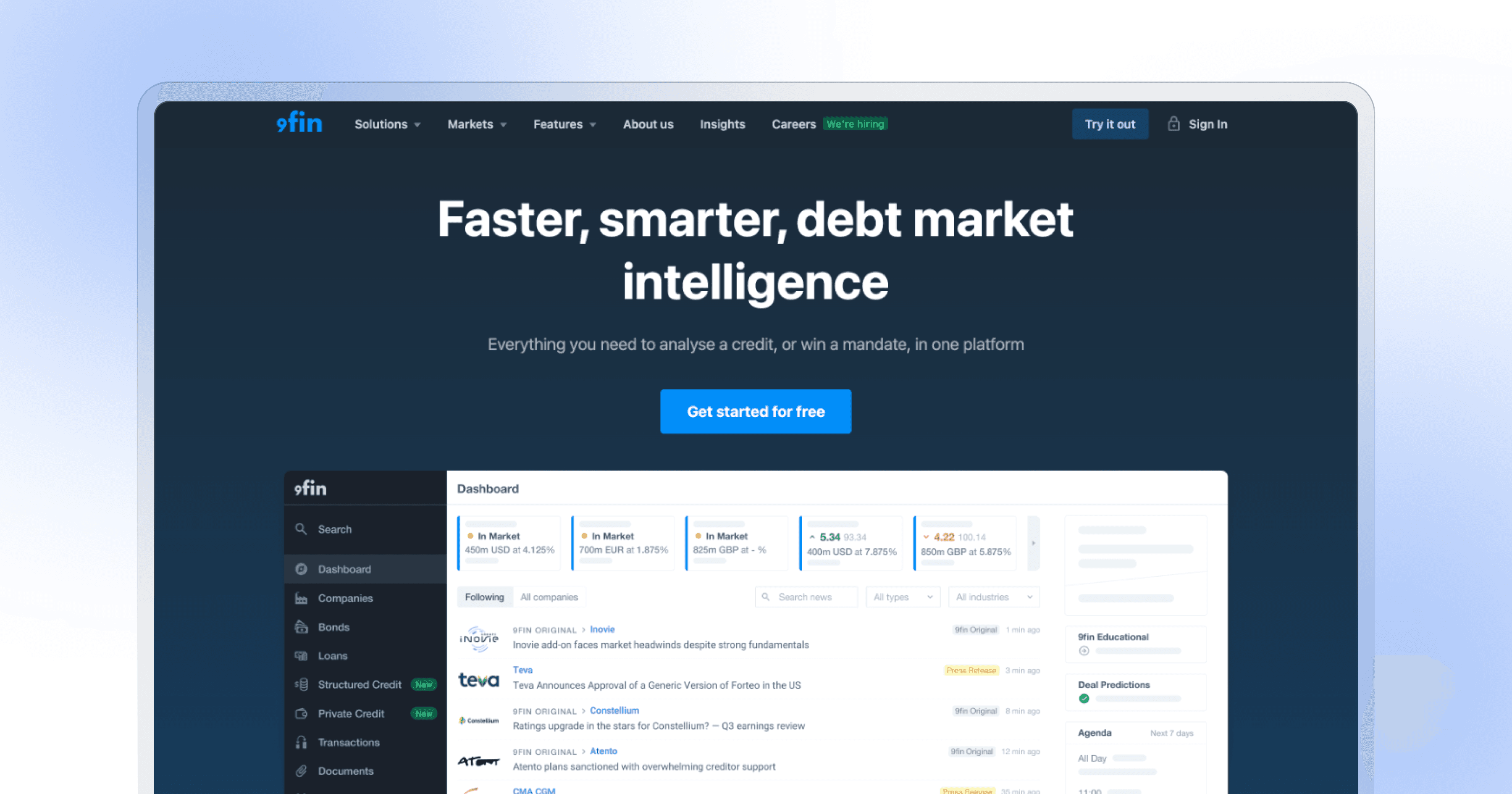
The site had originally been built for a smaller company with simpler marketing needs, but as content production accelerated and new campaigns launched, the limitations became increasingly clear.
A Publishing Workflow That Slowed Down Content and Campaigns
9fin produces a high volume of market research, insights, and educational content designed to attract and engage financial professionals. Publishing this content consistently is central to the company’s marketing strategy. However, the existing website made content management difficult.
Updating pages or publishing new content often required engineering support, slowing down the marketing team’s ability to move quickly. Even small changes, such as editing copy, updating images, or launching a new landing page, could create bottlenecks.
As content production increased, the team needed a system that would allow marketers to publish insights and launch campaigns without relying on developers.
Limited Control Over Gated Content and Lead Generation
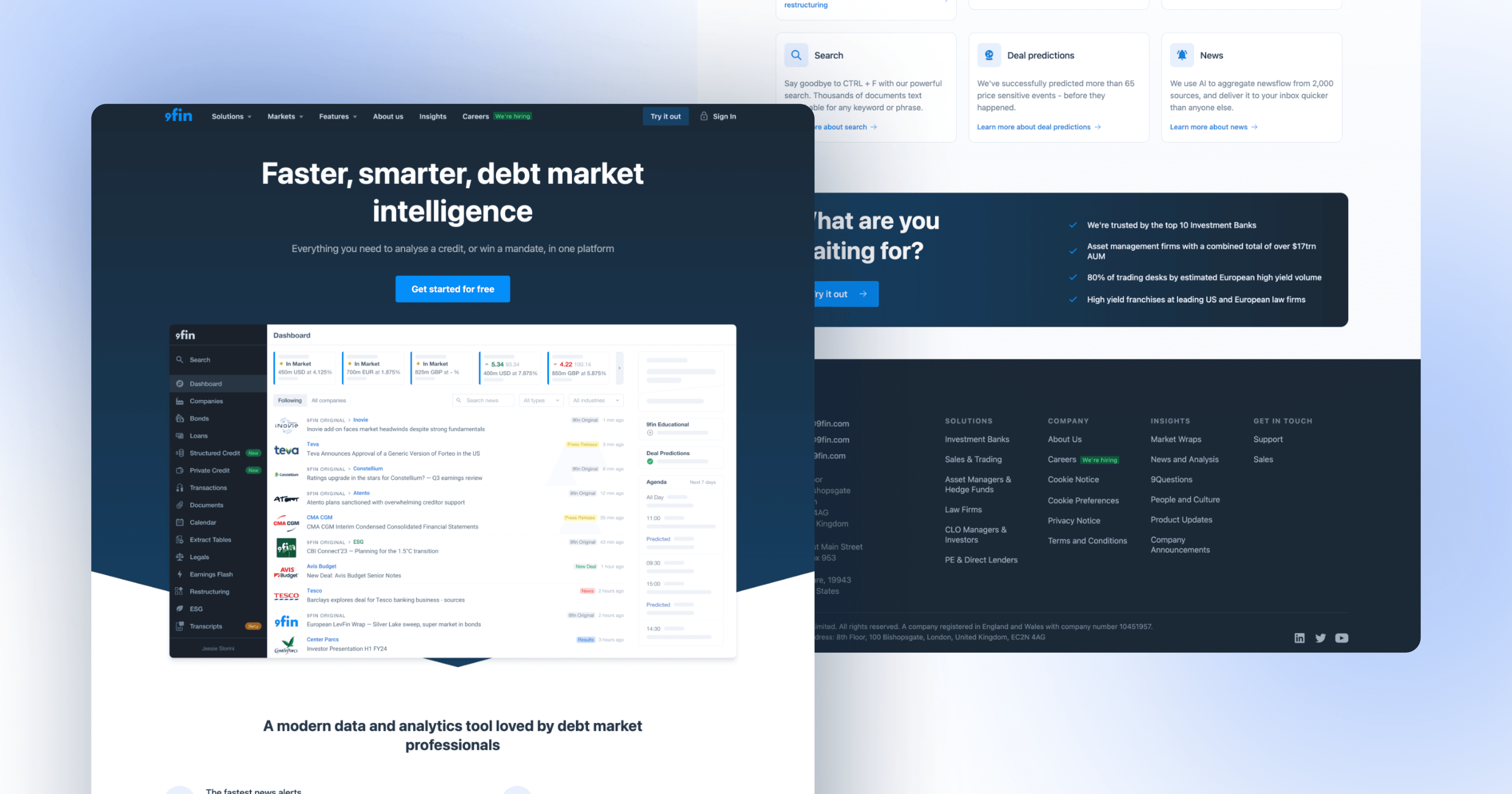
Much of 9fin’s content strategy revolves around premium research reports and market analysis. To support lead generation, the team needed flexible ways to control how users access this content. Certain content required different gating strategies, including:
- Hard gates for premium reports and downloads.
- Metered access for insights and articles.
- Lead-capture forms integrated marketing automation workflows.
However, the existing website made it difficult to implement and test these workflows. Launching new gated assets required custom work, which limited the team’s ability to experiment with different conversion strategies.
Technical Constraints That Limited SEO Growth
The existing website structure also limited 9fin’s ability to expand its SEO strategy. 9fin’s marketing team wanted to improve the structure of research and insights so that search engines could more effectively discover and index the company’s content.
This included reorganizing key pages, scaling the insights library, and ensuring proper sitemap and indexing behavior.
But technical constraints in the existing system made these improvements difficult to implement. Without a more flexible foundation, 9fin would struggle to fully capitalize on its content strategy and grow its organic search traffic.
Designing and Building a Modern Marketing Website for 9fin
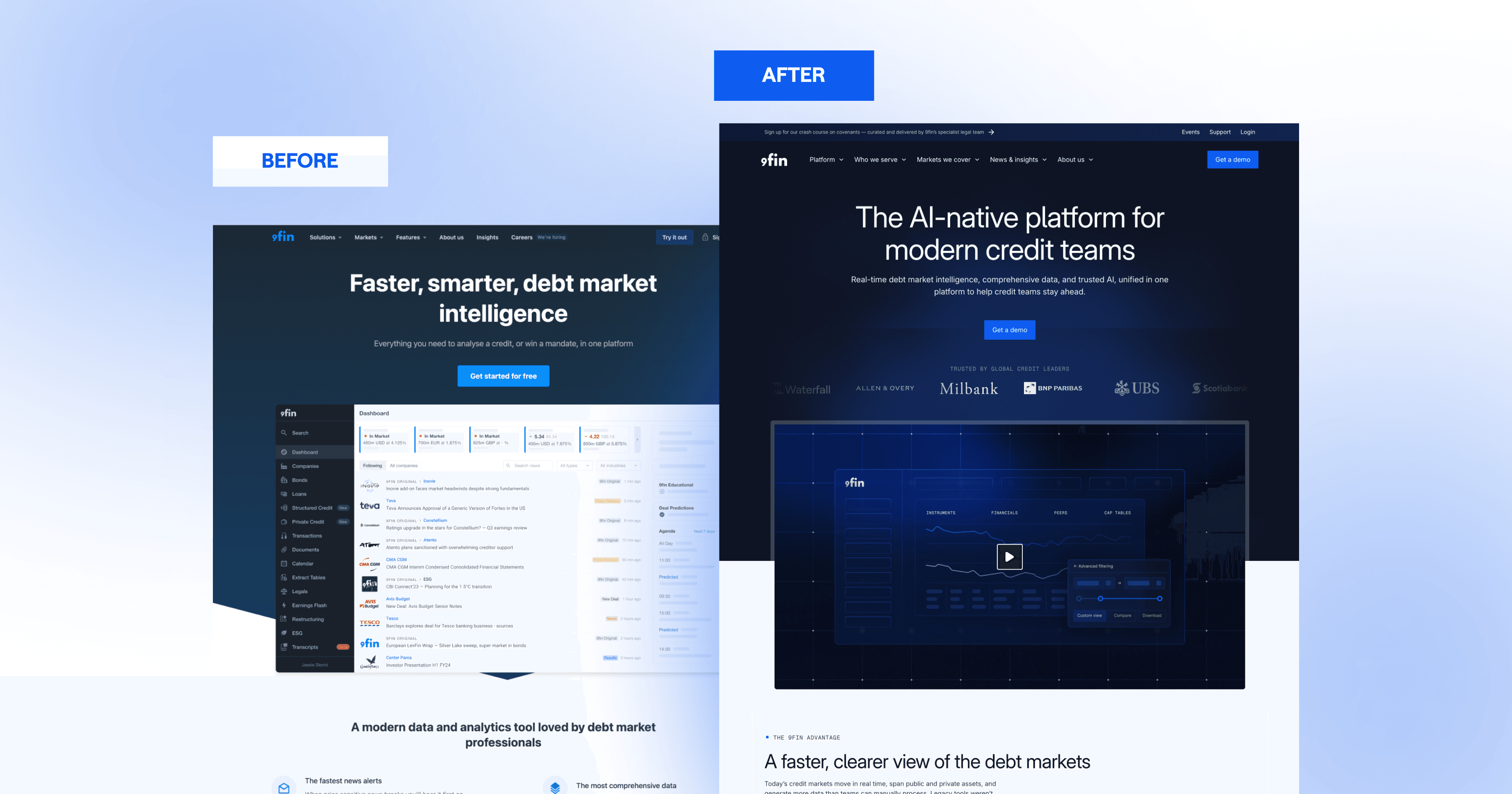
After evaluating 9fin’s goals and the limitations of the existing site, Webstacks recommended rebuilding the marketing website as a composable platform designed specifically for high-volume content publishing, gated research distribution, and long-term SEO growth.
Rather than simply redesigning the interface, Webstacks worked with the 9fin team to rethink how the website should function as a marketing system. This included restructuring the site architecture, designing a modular component framework, and implementing a headless CMS to enable the marketing team to manage and scale independently.
A Composable Architecture Built for Performance and Scalability
Because 9fin produces a high volume of content, the platform needed a CMS capable of supporting structured content models and flexible publishing workflows. Webstacks implemented Sanity to give the marketing team greater control over how content is created, organized, and distributed across the site.
The new stack includes Sanity for structured content management, Next.js for a high-performance frontend, and Vercel for deployment and infrastructure.
This architecture provides the performance and scalability required for a modern marketing website while allowing the 9fin team to publish insights, update pages, and launch campaigns without relying on developers.
A Website Redesign That Matched 9fin’s Market Maturity
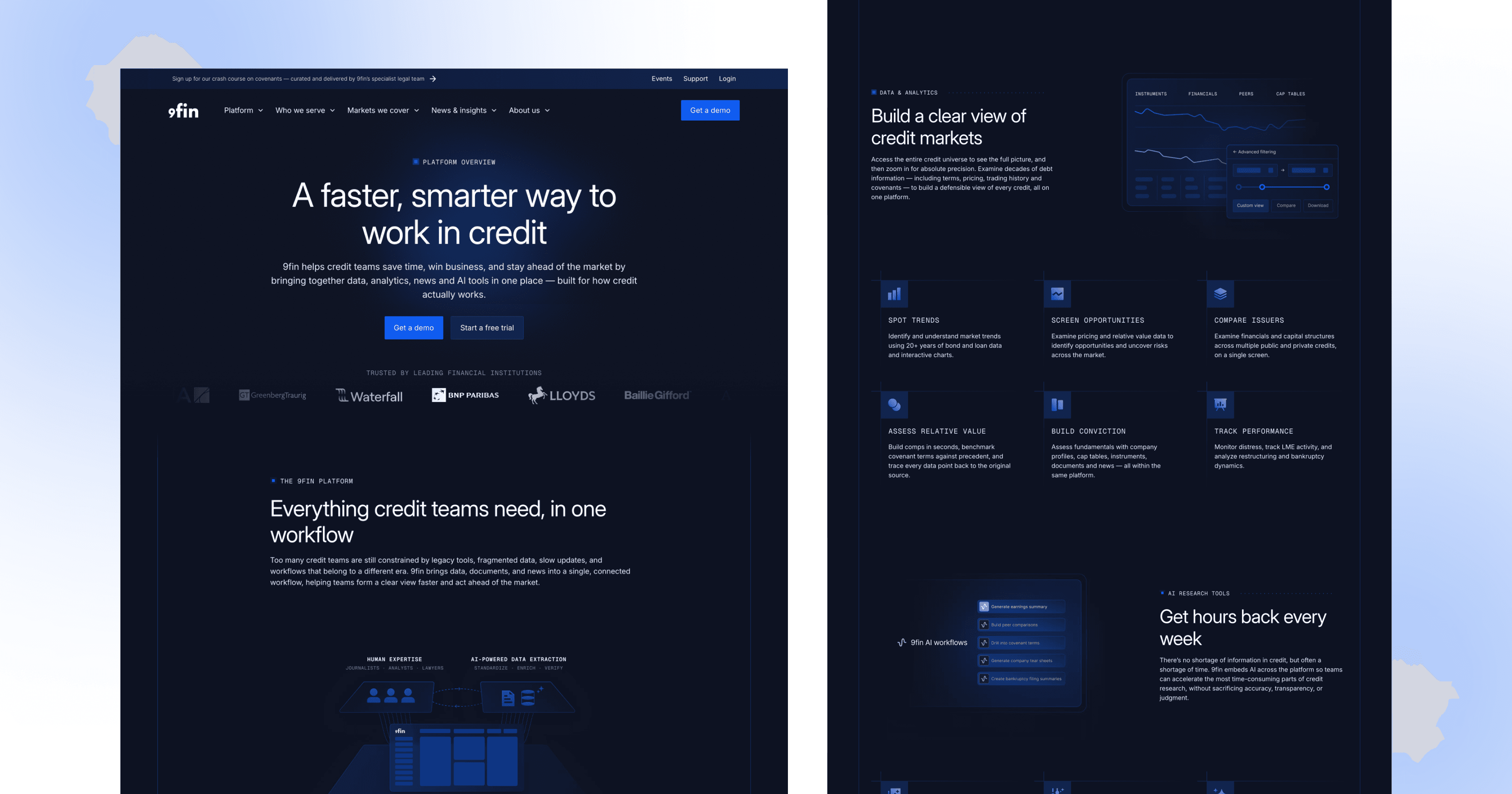
Alongside the technical rebuild, Webstacks led a full redesign. Through a series of design workshops with the 9fin team, several critical questions were answered: How should the platform be explained on the website? What makes 9fin meaningfully different in the credit markets? And how should the site guide distinct audiences, such as banks, law firms, and advisors, to the information most relevant to them?
The resulting design translated those answers into a clearer, more structured website experience. Product capabilities were framed more deliberately, messaging highlighted 9fin’s differentiation in financial data and intelligence, and navigation pathways were designed to guide each audience through the platform’s value.
Because 9fin publishes a large volume of research, insights, and educational content, the design also needed to support high-density information without overwhelming users. The new visual system balances storytelling with structured content, allowing complex financial information to be presented clearly and consistently across the site.
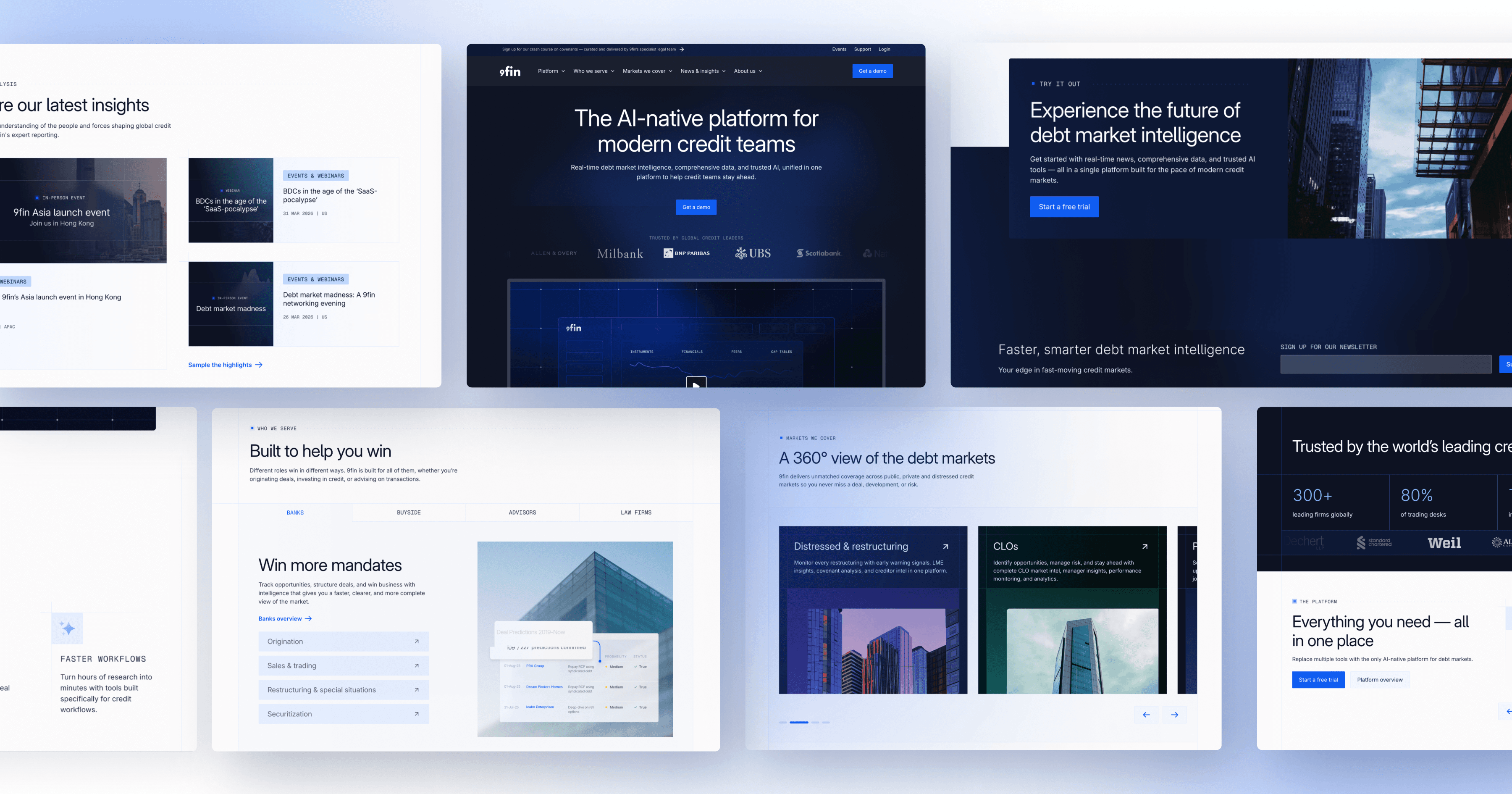
To operationalize this system, Webstacks translated the design into a modular set of reusable components within the CMS. Sections such as hero blocks, switchback layouts, testimonials, and conversion panels give the marketing team the flexibility to assemble new pages while maintaining a consistent visual language.
Together, the redesign and modular component system created a website that reflects the sophistication of the 9fin platform while giving the team a flexible foundation for future growth.
Empowering the Marketing Team to Own Content and Conversion
To support 9fin’s high publishing velocity and research-driven marketing strategy, Webstacks implemented a structured content system in Sanity, enabling the marketing team to manage the website independently.
The system allows the team to create and update pages without engineering support, reuse components and shared content across the site, and centrally manage navigation, testimonials, and conversion panels.
Because 9fin’s growth strategy relies heavily on gated research and lead generation, the new website was also designed to integrate directly with HubSpot.
Marketing teams can now embed forms across landing pages, capture gated content downloads, and route leads directly into sales workflows. The site also supports multiple gating strategies, including premium report downloads and metered access to insights, giving the team the flexibility to experiment with how content converts visitors into leads.
Together, these improvements transformed the website from a static marketing presence into a scalable marketing platform that the 9fin team can operate and evolve independently.
Traffic Growth, Faster Publishing, and a Website Built to Scale
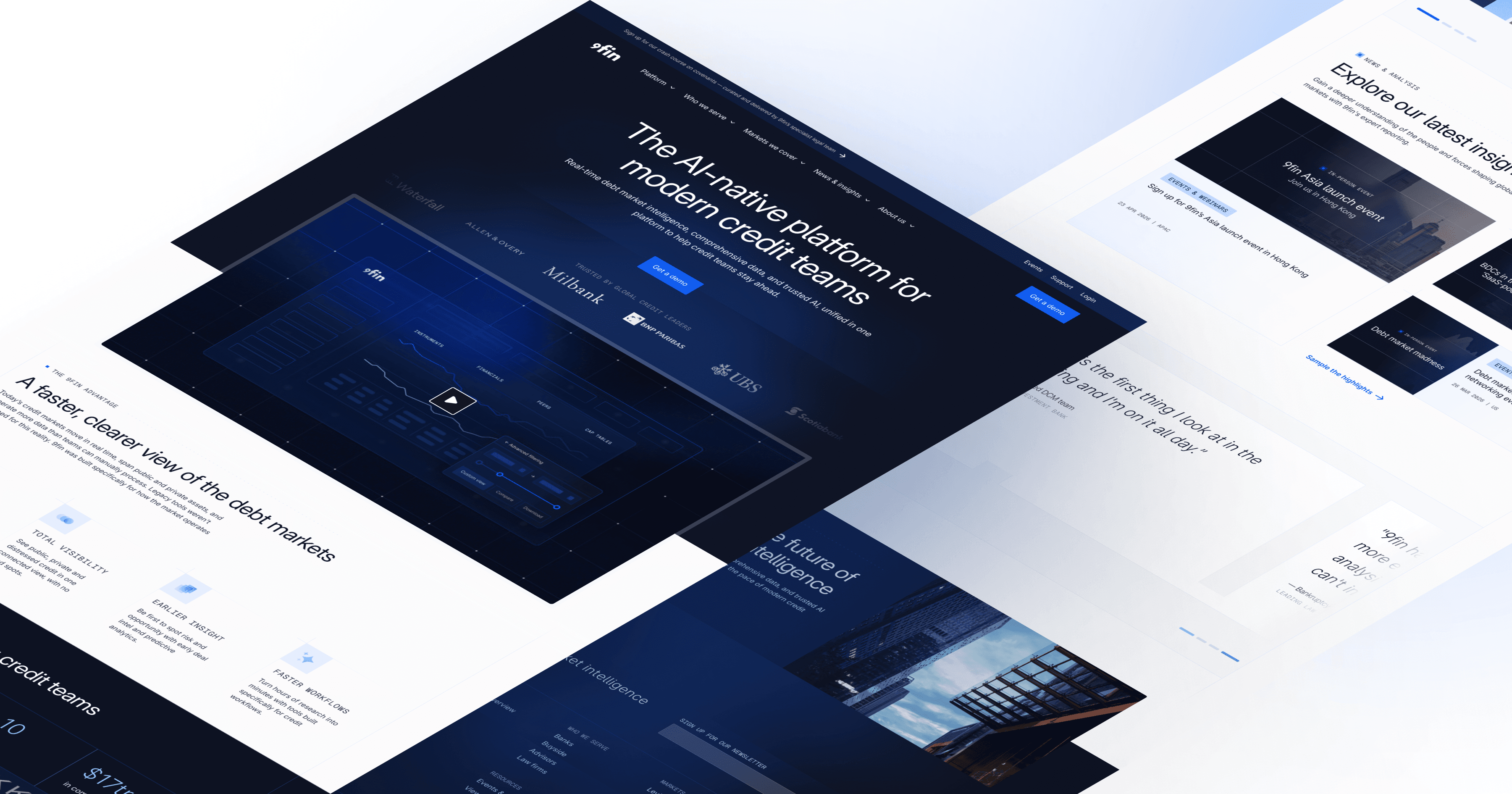
The new website delivered an immediate impact upon launch, improving traffic performance and giving 9fin’s marketing team the tools they needed to move faster.
Following the phased rollout, 9fin saw a 118% increase in website visitors in just the first 3 months. The improved site structure enabled search engines to crawl and index more pages, contributing to a rapid increase in organic traffic shortly after launch.
With Sanity powering the CMS, marketers can now publish insights, research updates, and landing pages without engineering involvement, allowing content to go live in minutes rather than hours or days. With a scalable architecture, a flexible CMS, and a modern SEO foundation now in place, the 9fin team has a marketing website built to support long-term growth, from scaling research publishing to launching new campaigns and expanding organic search visibility.