Modular Web Design: The B2B SaaS Playbook for Scalable Websites


The idea of a perfect website is dead. Treating a website as a massive, one-time project leaves B2B SaaS teams with rigid systems that are nearly impossible to scale.
When traditional redesigns cost $50,000 to $100,000+ and operate on grueling 9 to 12-month cycles, teams look for shortcuts—usually falling back on static page templates. But because these templates are built for a single, uneditable use case, they quickly break down.
With a traditional website architecture, SaaS teams routinely run into the same roadblocks:
- Developer Dependency: Content editors rely heavily on internal engineering resources. Marketers get sidelined, and product devs get pulled away from core product work.
- Design Hodgepodge: Over time, quick fixes create an inconsistent UX, a fragmented brand feel, and a massive bottleneck for Conversion Rate Optimization (CRO).
The alternative? Think modularly.
By treating your website as a system of reusable, interchangeable components, B2B SaaS teams can deploy pages faster, maintain brand consistency, and free up development resources.
What is modular web design?
Think of modular design like building with Legos. Instead of creating a single, unchangeable plastic toy, you create a collection of independent blocks that can be rearranged into completely different structures.
In the digital world, modular web design applies this exact philosophy to your website, breaking large, complex layouts down into small, highly flexible components.
To build these systems seamlessly, we lean on atomic design—a methodology coined by Brad Frost. It breaks interfaces down into five distinct stages: atoms, molecules, organisms, templates, and pages. By building up from the smallest pieces (like a button or a form field) into larger organisms (like a hero section or a testimonial grid), teams inherently create portable, reusable components that can live anywhere on a marketing site.
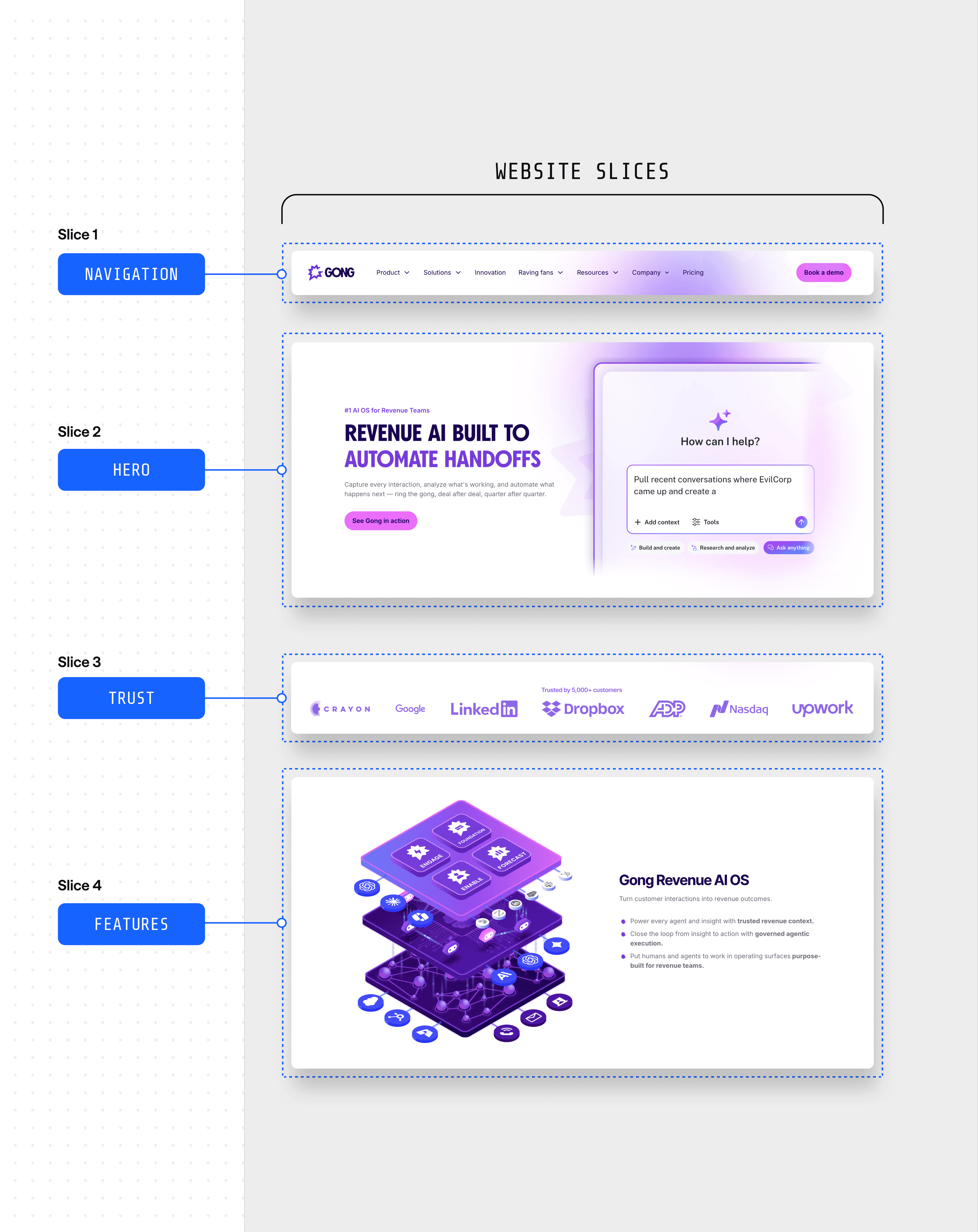
We can break down websites into smaller parts. Gong's homepage uses four website components: navigation, hero, trust bar, and features block. When these independent components come together, they form the finished product: Gong’s homepage.
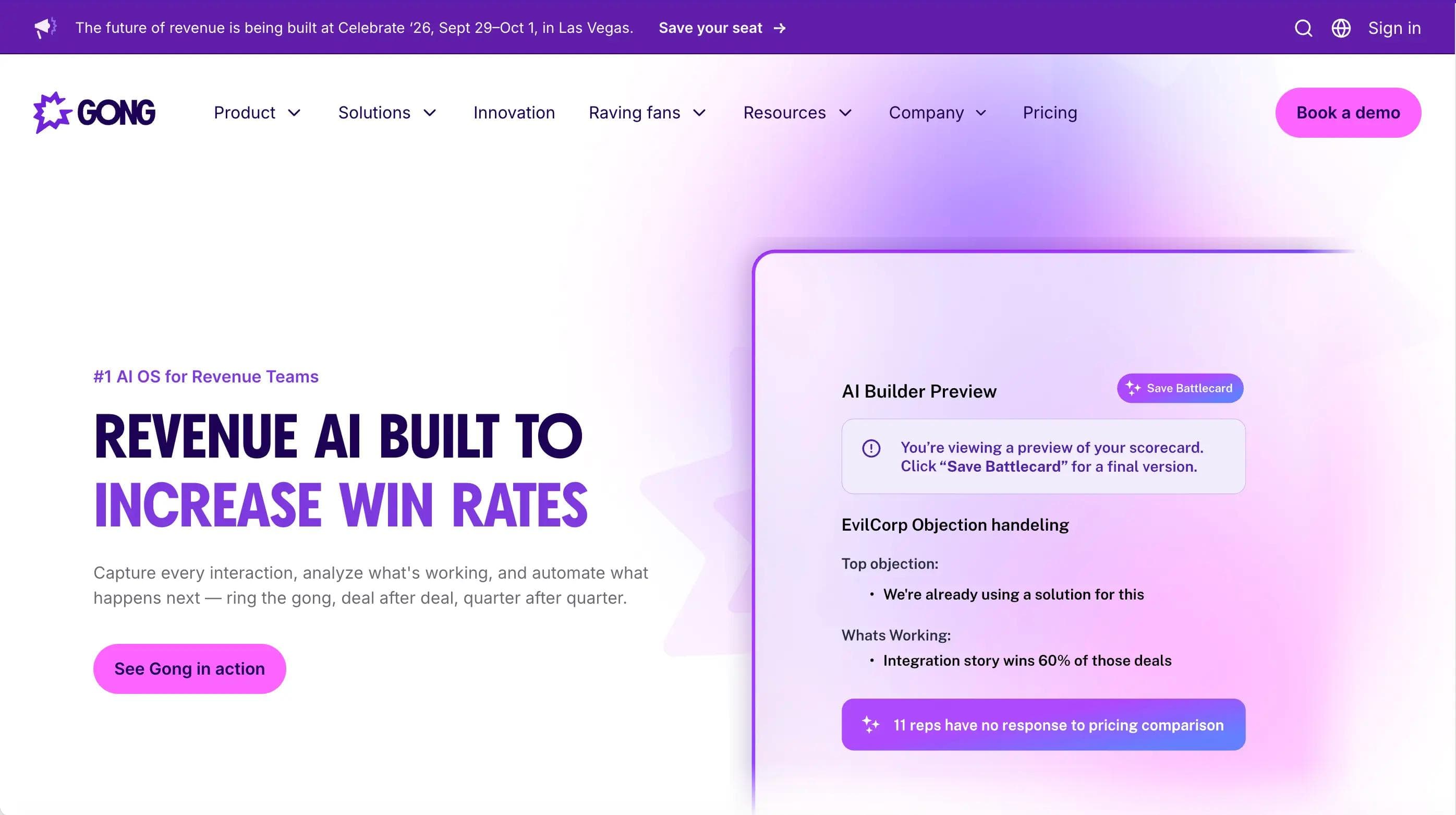
Gong can move the trust bar component to the bottom of the page and place the features component below the hero component, or leave it as is. Breaking down a website from macro to micro leaves teams with individual website components used to build any website page for any use case.
Page templates vs. modular web design
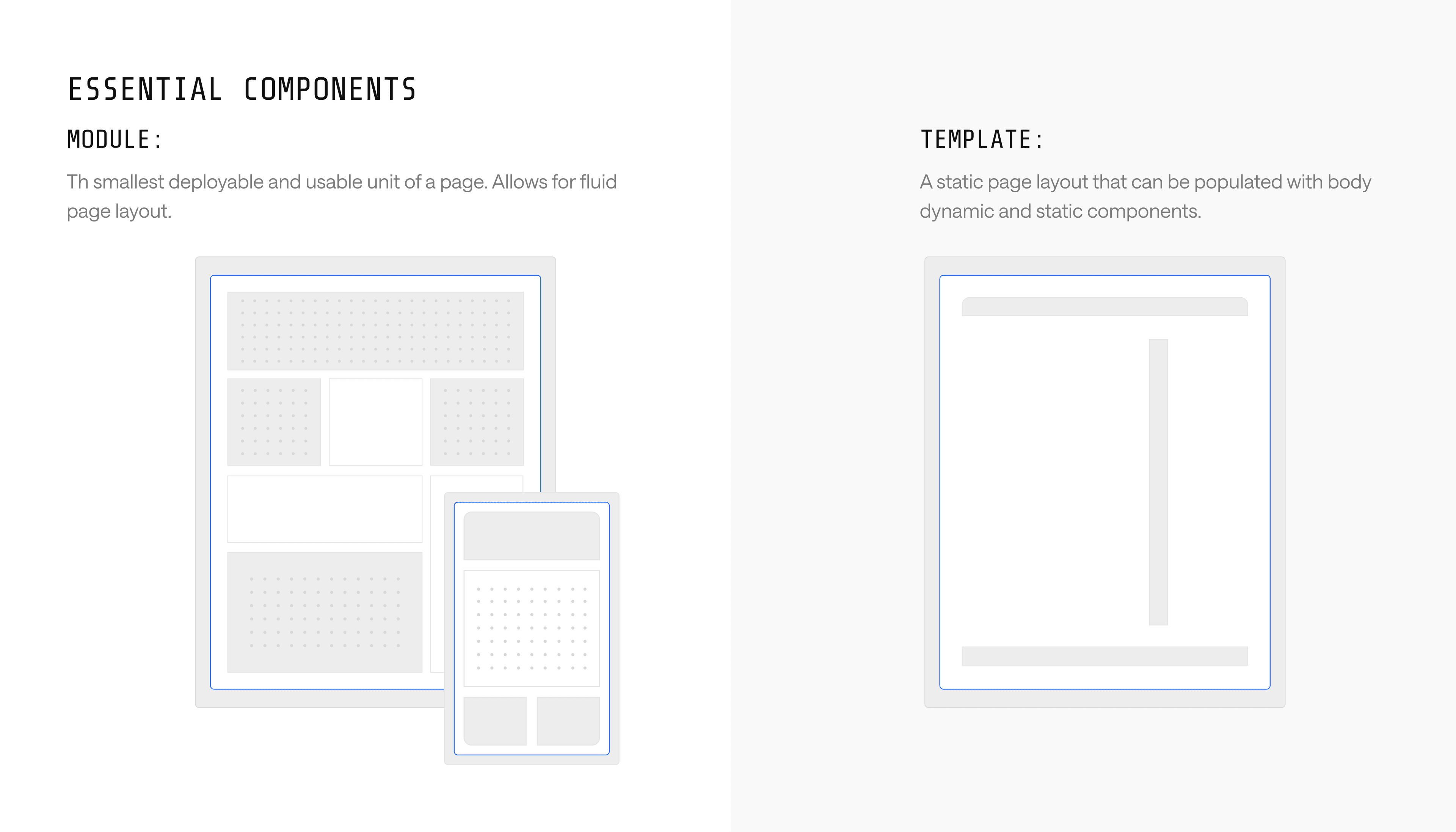
Page templates are rigid in design and cannot be customized without development resources. They are designed and developed for a singular use case.
Modular web design takes the end product, the website, and breaks it down into micro parts to promote reusability. In modular web design, components used on a homepage can also be used on another webpage for a different use case while maintaining its functionality.
What website components can I reuse with modular web design?
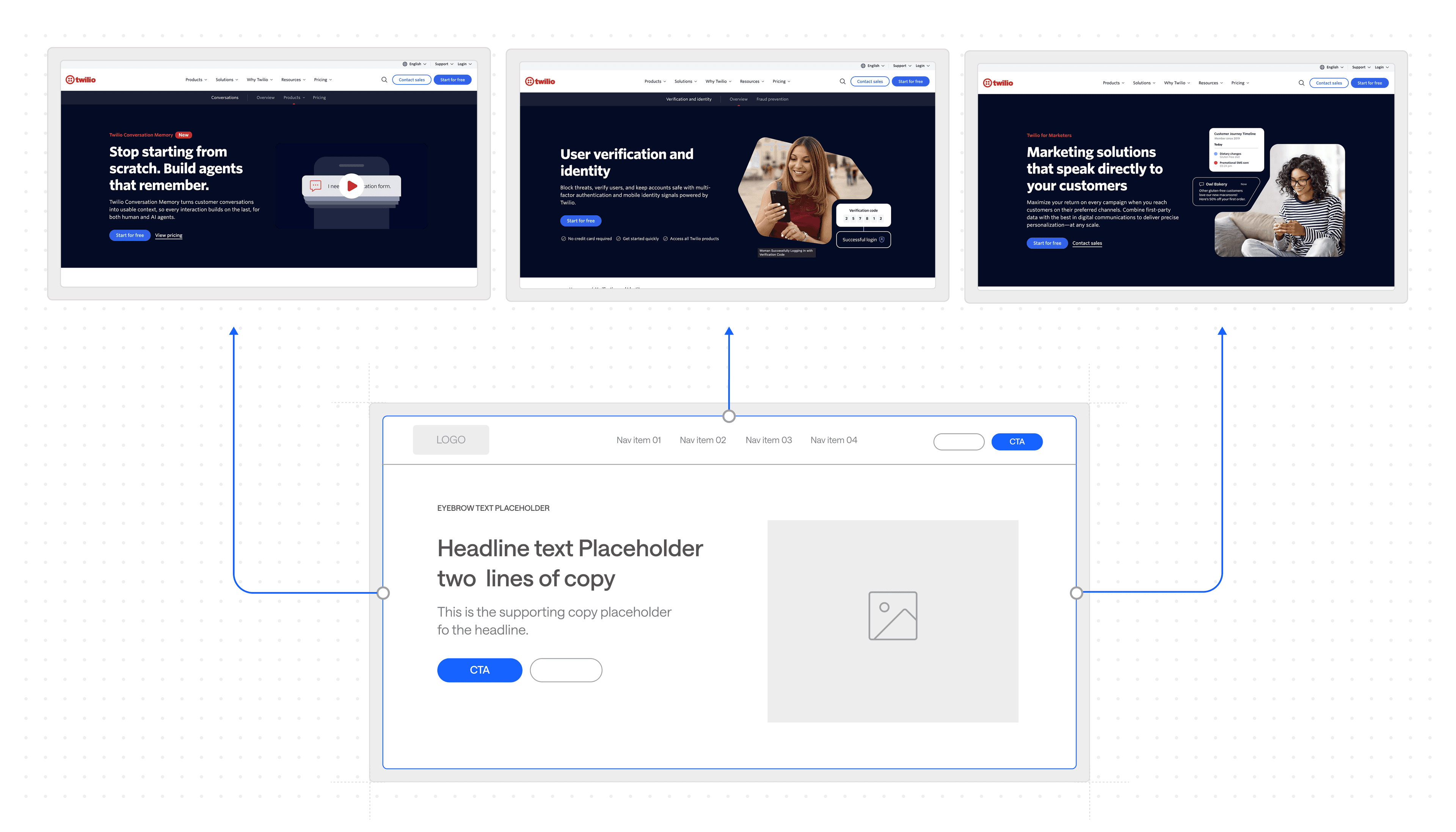
SaaS marketing websites share many of the same website components. For example, almost all B2B SaaS websites contain a hero component: the first section users see on a website, with images, heading text, call-to-action buttons, and links.
The hero component is used on several pages across the site without changing the original component.
In the example featuring Twilio, the homepage hero section contains the same elements used on one of Twilio's product pages. The illustration and the position of the call-to-action buttons change. Overall, the pages are identical.
The elements that make up this website component's skeleton carry over across pages.
Other website components B2B SaaS marketing sites use across different website pages include:
- Accordion - Displays a list of headers with additional information shown when clicked on.
- Card Deck - Composed of multiple cards to display additional information to the user in a row format.
- Conversion Panel - Guide users toward your goal conversion by leading them to a desired conversion point.
- Footer - Another form of navigation placed at the end of every page to help users find the pages they're looking for.
- Hero - The first section users see when arriving on a website and deployed on every page across the website.
- Switchback - A two-column section that typically includes copy on one half and imagery on the other.
- Trust Bar - Present familiar business logos to provide social proof.
Reusability produces measurable gains. Grammarly reported that its design system saved design and development teams 25% of their work week, time that goes straight back into shipping.
Traditional web design vs. modular web design
B2B SaaS teams get a modular website by continuing to improve it after launch.
B2B SaaS teams without a modular website implement a traditional web design approach that limits content editors. Traditional and modular web design differ in how much control content editors have after launch.
Traditional web design requires teams to undergo constant website redesigns over time. B2B SaaS teams undergo a design cycle every few years, only to have a fresh new website every cycle to either look cool or stay on top of their competition.
Aging monolithic sites carry real costs. The MACH Alliance found that businesses with two-thirds or more legacy infrastructure spend nearly 60% of IT time and budget on upgrades. That leaves less room for innovation. B2B SaaS teams today need to consider how the ever-changing market should influence their web presence by constantly monitoring and improving the site based on short-term data.
By contrast, modular web design lets teams tackle a website project little by little. From a marketing perspective, this allows for constant website experimentation, which the traditional web design approach lacks.
The benefits of modular web design
B2B SaaS websites use the same component-first pattern, even though each site serves a different audience and product. The four examples below show how the same navigation, hero, and feature-block components can be recombined to fit each company's positioning without a full rebuild.
Faster iterations and faster deployment
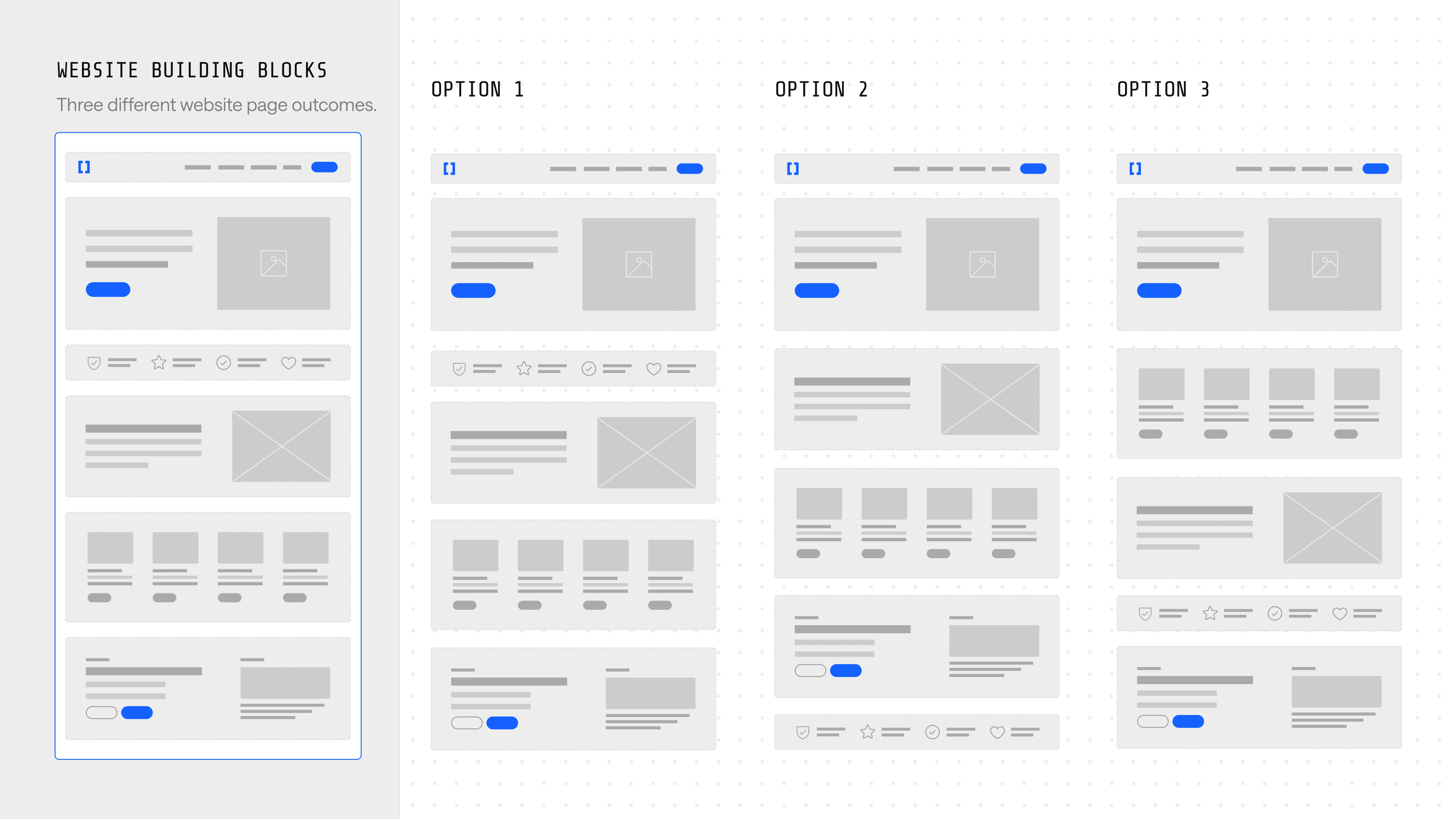
Five website page templates leave you with five fixed options. Website and content teams are left frustrated with five templates that cannot be customized unless the templates are redesigned and developed.
A modular website with five components can have several page possibilities. The components can be rearranged to build fresh new pages that aren't templatized. SaaS teams can quickly launch a website MVP with a set of components and continuously add to it with an iterative approach.
A seasonal campaign landing page can usually start with existing website components before new customization is scoped. A podcast listing page can use the homepage hero component and card decks that also work for a future blog listing page.
With modular web design, teams build the pages they want with existing components. If they don't exist, then build them. You can't do that with templates. Speed matters here beyond convenience. Portent's study of 27,000+ landing pages found that B2B sites loading in 1 second have conversion rates 3× higher than sites loading in 5 seconds, and 5× higher than sites loading in 10 seconds. Reusable components built for performance help teams ship fast pages consistently.
Website teams have more control over the content
Teams need a content management system, preferably a headless CMS, that is flexible enough to let content editors build the pages they desire. Because the traditional approach to web design is for templated websites, development teams are expected to understand what marketing and content teams wish to accomplish with each page queued up for production.
Modular web design gives content teams more control of the website by closing the gap between marketing and development teams. By starting with smaller parts of a site, content teams already know what's available to build net new pages.
Content teams can treat website components like LEGO bricks. With these components, content teams create several web pages without involving designers or developers. Designers and developers create the initial website components and make improvements as content teams see fit.
When content editors have more control over the website, they reap the following benefits:
- Improve speed to market of various campaigns and launch new promotional assets for product releases faster. Sales teams get more pipeline to work with.
- Quickly shift campaigns if needed based on the results and insights gathered from a customer's website behavior.
Easier to maintain and change
From the header navigation to the page footer, a modular website is easier to maintain than a template. Using the CMS, a content editor can rearrange a page's components whenever.
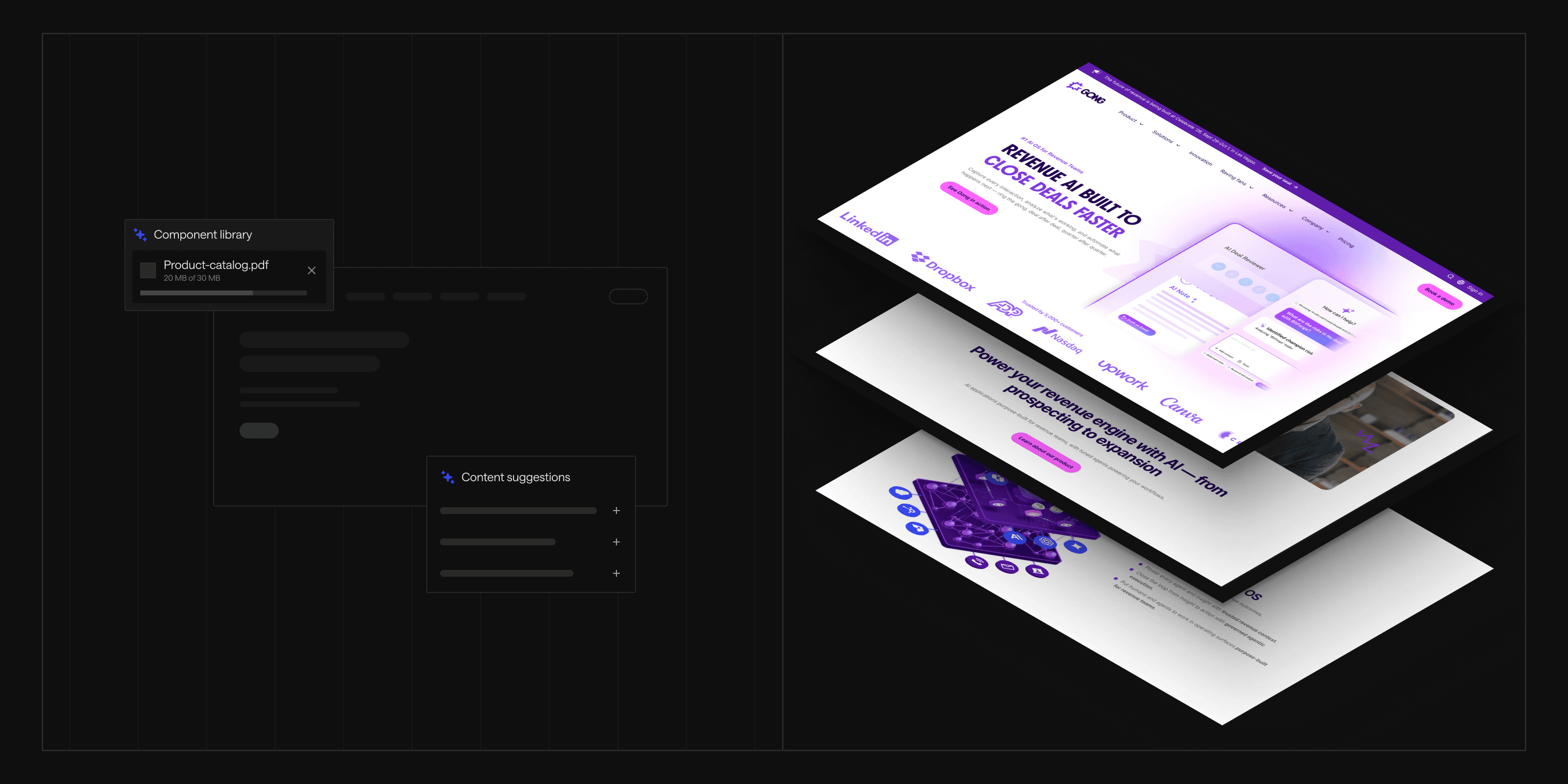
The image above shows how the components of a homepage can be rearranged within a modular Sanity CMS setup. By having independent components, content editors can build multiple homepage variations.
With traditional web design, SaaS teams enter cycles of six-month-long redesigns only for the site to sit for years until it's time to do it all over again. Teams can make gradual changes in six months as if the website were a product.
In modular web design, it's faster to make any updates to the components than to rebuild an entire template. Make changes to the individual components on an ongoing basis to see what sticks with the respective audience.
Examples of modular web design in B2B SaaS
B2B SaaS websites use the same component-first pattern, even though each site serves a different audience and product. The four examples below show how the same navigation, hero, and feature-block components can be recombined to fit each company's positioning without a full rebuild.
ServiceTitan
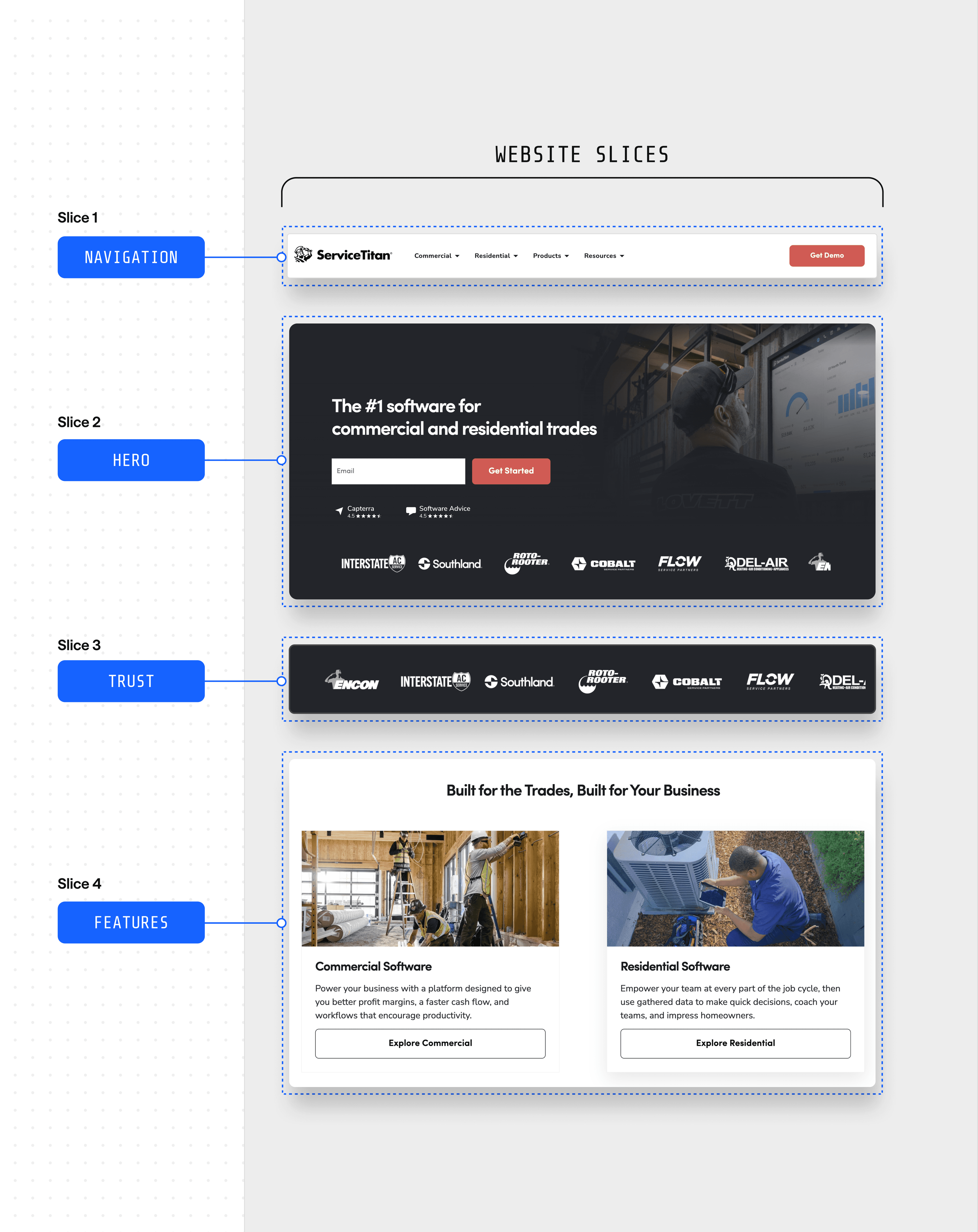
ServiceTitan sells software for commercial and residential trades, with a dedicated focus across its Commercial, Residential, and Construction segments. Its site uses a modular structure and shared component library to serve distinct audiences across trades.
Calendly
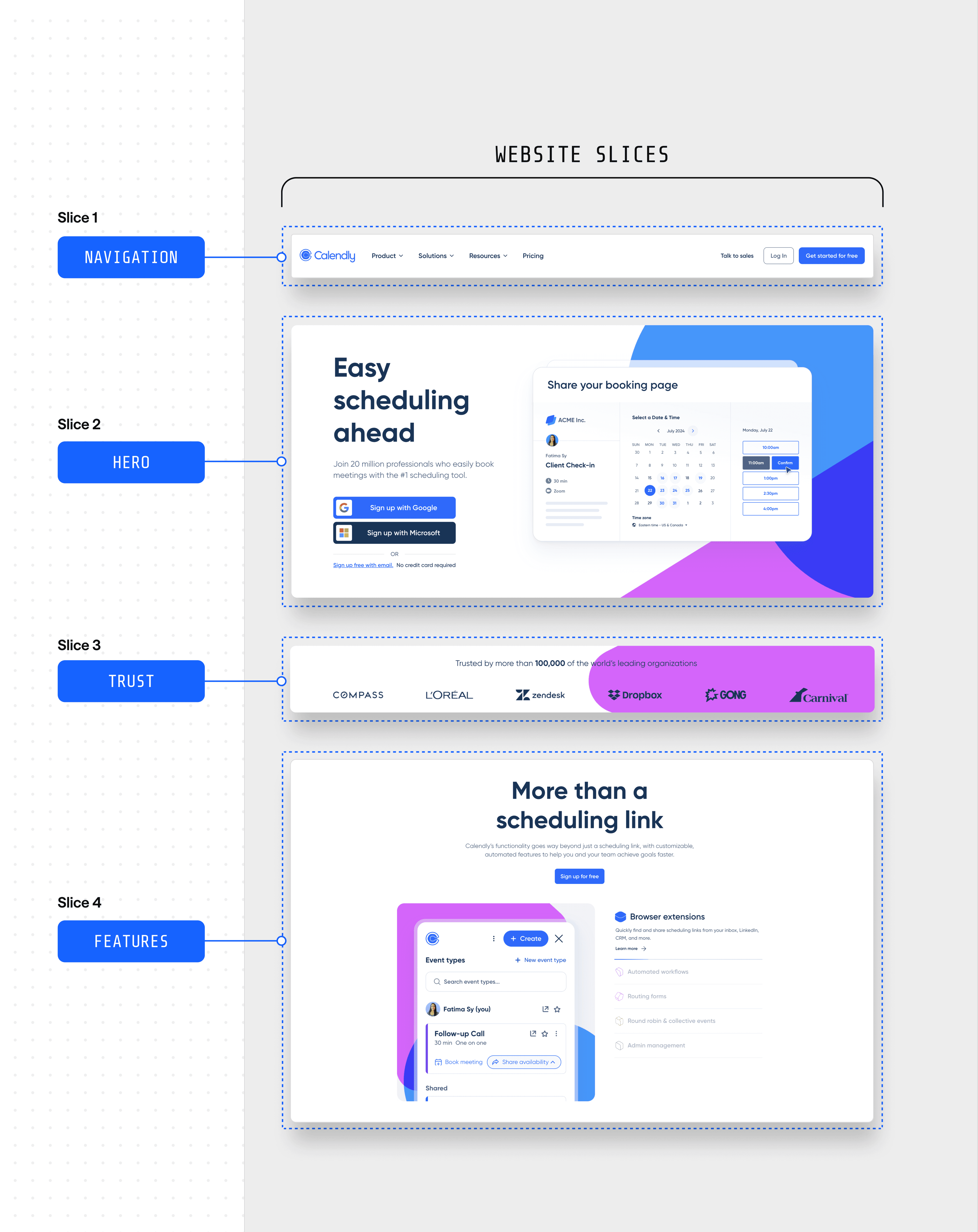
Calendly is a SaaS scheduling platform. Calendly's site cites 20 million professionals and more than 100,000 organizations using its scheduling tool. Reusable hero and social proof components let Calendly scale its marketing pages as its user base grows.
Retool
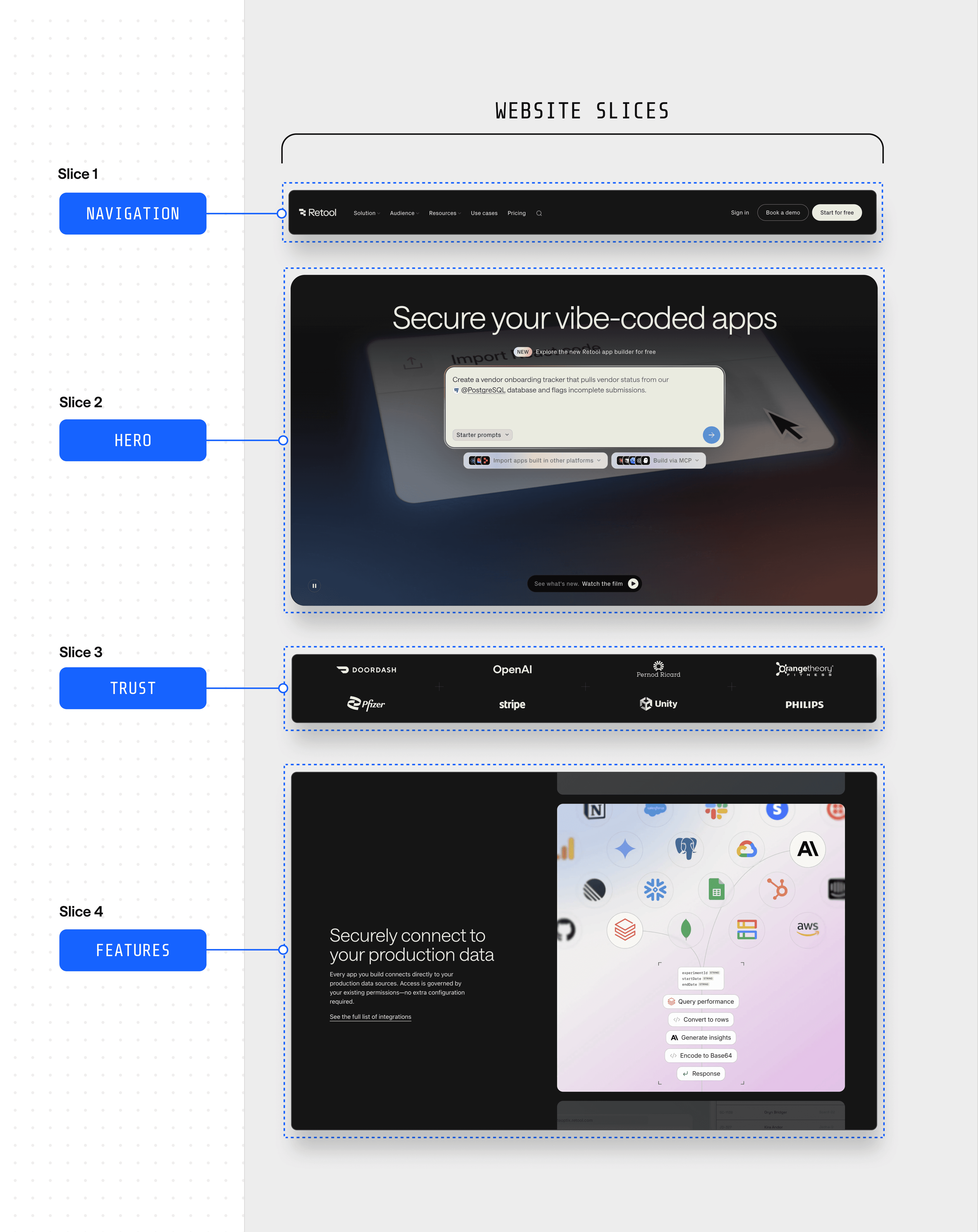
Retool is a tool builder that lets users build custom UIs using out-of-the-box components like tables, lists, charts, and more. Built for data, Retool offers users a library of API integrations that help them better track data from all their apps.
Freshworks
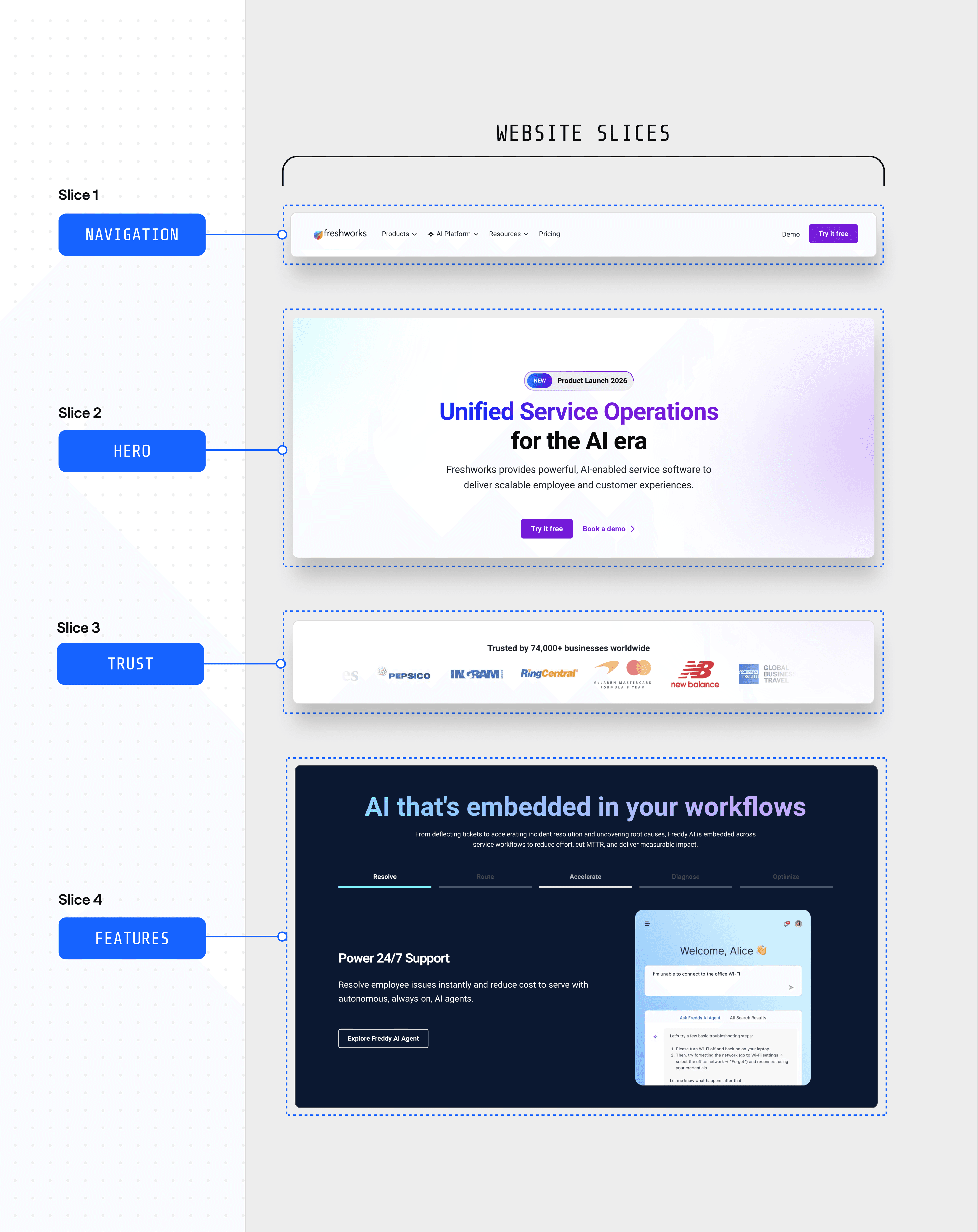
Freshworks builds tech for IT and employee service operations. Its homepage centers on Freshservice and its Freddy AI capabilities under the "Unified Service Operations for the AI era" positioning. The site's modular approach lets Freshworks include product-specific components and AI messaging across pages without rebuilding templates each time the focus shifts.
Transitioning to modular web design
Moving to a modular approach is less about a single project and more about a shift in how the team treats the website going forward. The following covers the mindset shift, the planning involved, and what ongoing investment looks like once the transition is underway.
Adopting the mindset: your website is never done
The website will constantly change. The website should always be updated with new website components and functionality.
Continuous improvements and investments help drive business outcomes faster than the traditional website approach. As the business grows and changes, so should the website.
Teams that expect the website to keep changing fit a modular approach. Teams that need a fixed, finished site do not.
Plan the transition accordingly
Modular web design involves many moving parts. A content management system that is flexible enough to support reusable components and scale with the site is required for a modular website. Other tools for analytics and performance should be accounted for.
MACH adoption supports this transition. The MACH Alliance's 2025 research found that 87% of organizations have widely implemented MACH technologies, and 9 in 10 organizations implementing MACH say it met or exceeded ROI expectations. Composable foundations also support newer investments, with the MACH Alliance reporting that 6× more organizations achieve AI ROI with a composable foundation.
Along with the tech stack required, ongoing support from an internal team or digital web agency is needed to support the iterative process. You'll need a team experienced with the disciplines involved in building a modular website and able to handle ongoing requirements.
Continuous improvement beats perfection
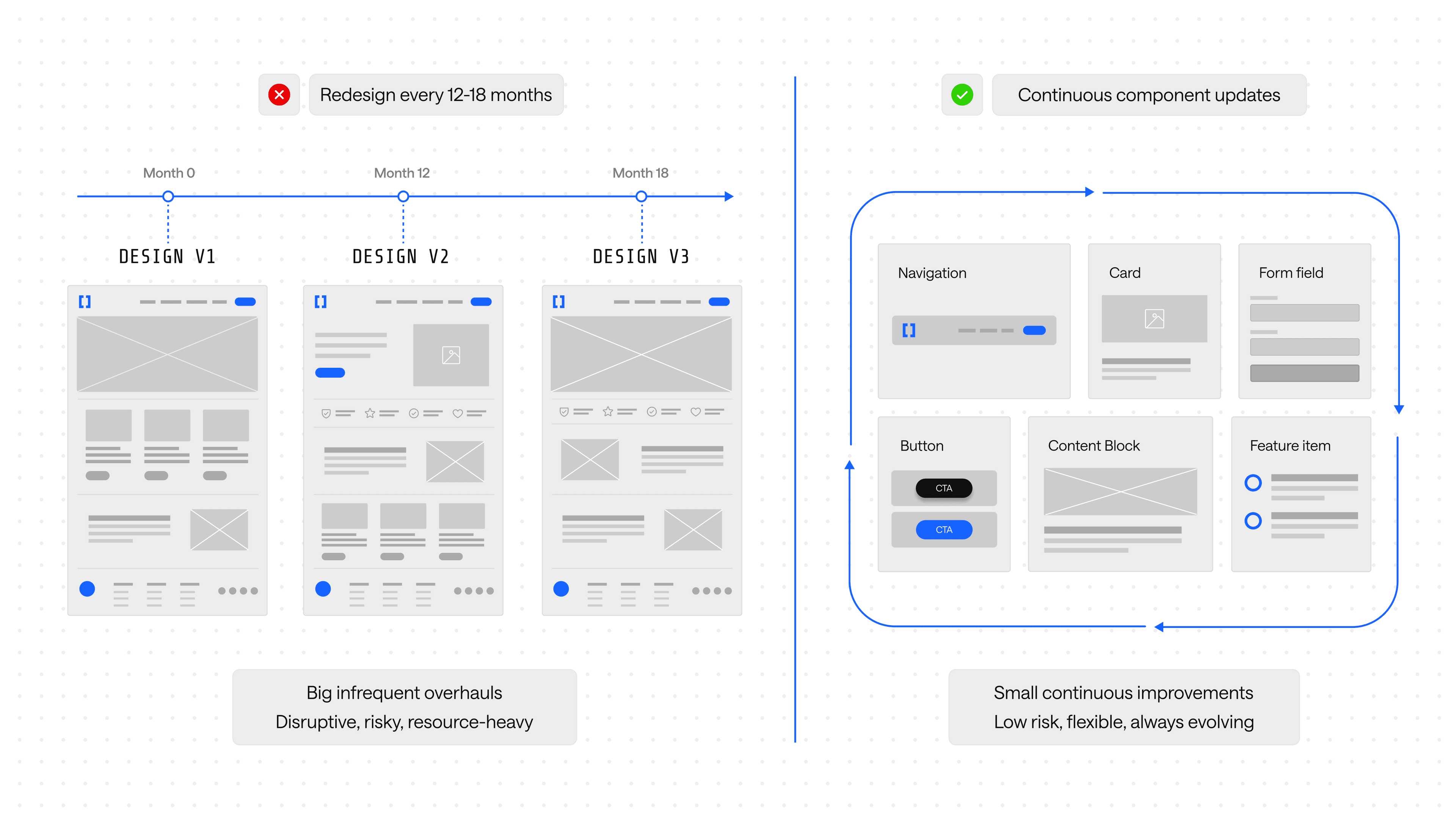
Website teams should continuously improve the website by adding new features on an attainable cadence as resources allow.
As industries and markets shift, B2B SaaS teams must think about crafting and launching new web experiences to stay ahead of the curve. Plan to give the website ongoing attention to build new web experiences faster than the traditional approach.
Building your modular website
A website that keeps improving is the goal. Modular web design turns your site from a static project into a product built from interchangeable parts. Design systems return real hours to teams, and faster pages convert better. Teams using modular systems can update pages more often than teams waiting for full redesign cycles.
Start by auditing the components your team already reuses and identifying the gaps that still require developer support. Talk with Webstacks to start building your modular website.

Your website is your biggest growth lever—are you getting the most out of it? Schedule a strategy call with Webstacks to uncover conversion roadblocks, explore high-impact improvements, and see how our team can help you accelerate growth.